

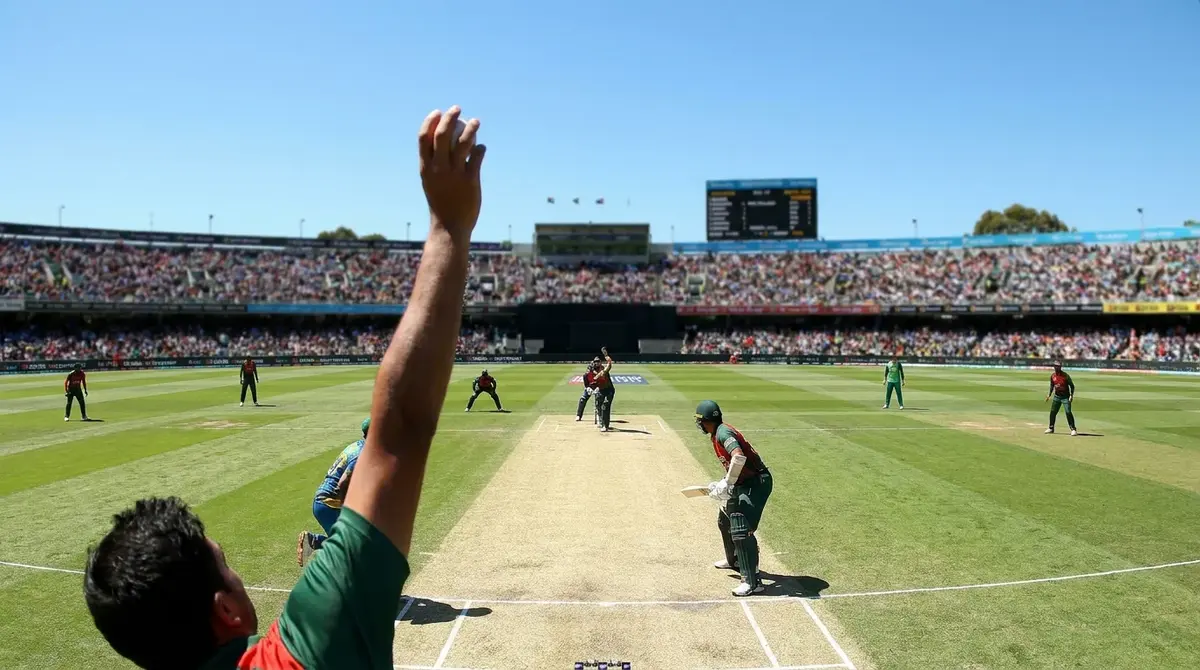
The first time I opened a cricket betting slip and saw 74 markets listed for a single IPL fixture, I closed the app. Not because I was overwhelmed — I had been betting on sport for years — but because I had no idea what half of them meant. “Method of first dismissal.” “Runs off the first ball.” “Highest opening partnership.” Cricket generates a staggering variety of betting markets, more than most sports, and the gap between knowing they exist and knowing how to use them is where most bettors leave money on the table.
Cricket accounts for roughly 8% of global sports betting revenue, a figure that reflects how deeply the sport’s structure lends itself to wagering. Every ball is a discrete event. Every over is a mini-contest. Every session has its own narrative. That granularity creates market variety that football and tennis simply cannot match. In this guide, I am going to walk through every category of cricket market available on UK betting sites, explain how each one works, and show you where the edges tend to appear.
Pre-Match Markets: What You Can Bet On Before Play
Before a single ball is bowled, a well-covered cricket fixture on a UK betting site will already have 30 to 60 markets open. Pre-match markets close at the toss or first delivery, so all the analysis — pitch reports, weather forecasts, team news, head-to-head records — feeds into these prices. Think of pre-match betting as the chess opening: you study, you prepare, and you commit before the chaos of live play begins.
The range of pre-match markets has expanded dramatically over the past five years. A decade ago, you might have had match winner and top batsman. Now, even a mid-tier County Championship fixture offers total runs, individual innings scores, player milestones, method of first dismissal, and more. The key distinction to understand is that pre-match odds are generally tighter — the bookmaker’s margin is lower — because the pricing is based on well-established data rather than the rapid-fire adjustments that in-play markets demand. If you do your homework, pre-match cricket markets reward preparation in a way that few other sports can match.

I always start my pre-match analysis with the pitch and weather reports, then move to team composition and recent form. A green-tinged pitch at Headingley suggests pace and swing, which pushes total run lines down and makes top bowler markets more interesting. A flat, dry surface at the Oval pushes run lines up and opens value in top batsman markets. The bookmakers have the same data, of course, but they are pricing hundreds of markets across dozens of sports simultaneously. A specialist cricket bettor who focuses on one match can sometimes spot a line that doesn’t quite reflect the conditions.
Match Winner and Match Result
Match winner is the gateway market — the one every beginner starts with and every experienced bettor still uses as a foundation. In limited-overs cricket, this is typically a two-way market: Team A or Team B. No draw option exists because the format guarantees a result through super overs or Duckworth-Lewis-Stern calculations if rain intervenes. Test cricket, however, introduces a three-way market: Team A, Team B, or the draw. That third outcome changes the entire dynamic. The draw is not a consolation prize in Test cricket — it is a genuine, strategically valid result that can carry surprisingly attractive odds, especially in matches where weather forecasts suggest lost playing time.
Pricing on match winner markets reflects the bookmaker’s assessment of each side’s probability of winning, plus a margin. A two-way ODI market with both teams priced at evens (1/1 in fractional terms, 2.00 decimal) would imply a true 50/50 contest — but you will never see that from a bookmaker because the margin pushes both prices slightly below fair value. Understanding this is fundamental: every match winner price you see has the bookmaker’s cut baked in. The skill lies in identifying matches where you believe the true probability diverges enough from the implied probability to overcome that margin.
Total Innings Runs and Over/Under Lines
Total innings runs — also called over/under lines — ask a simple question: will the combined runs in a given innings or match exceed or fall below a specified line? In a T20, you might see a line set at 165.5 for the first innings. You bet over if you think the batting side will score 166 or more, under if you expect 165 or fewer. The “.5” eliminates the possibility of a push — the bet must win or lose, never tie.
What makes this market fascinating in cricket is how many factors push the line around. Pitch condition, ground dimensions, boundary rope placement, dew factor in day-night matches, the specific batting and bowling line-ups — all of it feeds into the bookmaker’s line. I find over/under markets particularly valuable in T20 cricket where ground-specific data is plentiful. Some venues consistently produce high-scoring matches while others suppress totals. A venue like Chinnaswamy in the IPL historically runs hot; a ground like Dharamsala tends to keep scores lower. UK-based bettors can access this data quickly and form a view on whether the posted line accurately reflects the venue’s character.
Player Performance Markets
Roughly 15% of the UK population actively follows cricket and engages with major tournaments like the T20 World Cup. Many of those fans have a favourite player — someone whose technique they admire, whose form they track week to week. Player performance markets let you convert that knowledge into a wager.
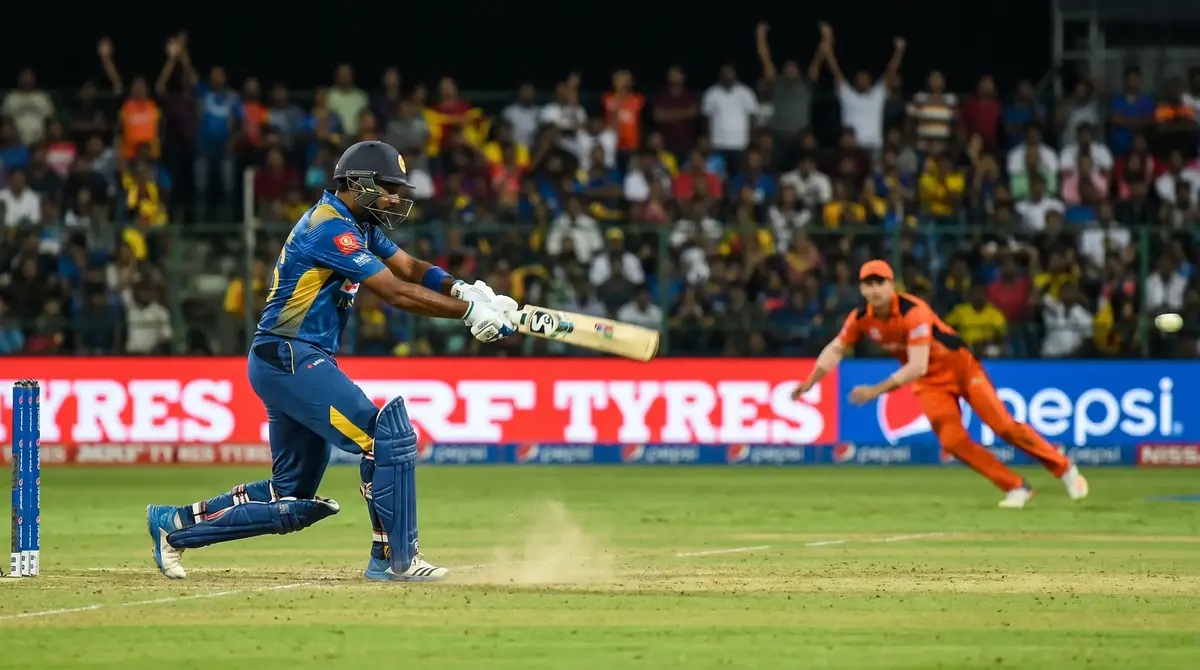
The top batsman market is the flagship player bet. It asks: who will score the most runs for their team (or in the match, depending on the market variant) in a given innings? Dead heat rules apply when two players finish level, which means your returns are halved if there is a tie. This market rewards bettors who understand batting order, recent form, and match-up dynamics. A number three batsman who faces the new ball after an early wicket has a very different run-scoring profile from a number seven coming in during the death overs of a T20.
Top bowler works the same way but for wickets. Who will take the most wickets in an innings or match? Pitch conditions matter more here than in batting markets. A surface offering lateral movement elevates the chances of fast bowlers. A dry, turning track shifts probability toward spinners. I have found that top bowler markets tend to carry slightly higher margins than top batsman markets, which makes sense from the bookmaker’s perspective — bowling outcomes are more volatile and harder to price accurately.
Beyond the headline player markets, you will find player milestones: will a named batsman score 50 or more runs? Will a named bowler take two or more wickets? These are binary yes/no markets and they appeal to bettors who have a specific thesis about a player’s performance but don’t want the variance of the top batsman or top bowler market. If I believe a particular opening batsman will have a big game but I’m not confident he will outscore everyone else, backing him at odds to reach 50 runs gives me a cleaner expression of that view. Player runs bands — will the batsman score 0-19, 20-39, 40-59, or 60 and above? — add another layer. These are essentially range bets, and they show up most frequently during major tournaments where bookmakers invest more in granular pricing.
In-Play Markets Unique to Cricket
I once turned a losing pre-match position into a profit purely through in-play markets during an Ashes Test. The pre-match odds had shifted against me after a poor first session, but a collapse in the second innings created opportunities on the session runs market that more than compensated. That’s the power of live cricket betting — the match is never static, and neither are the markets.
Live betting now accounts for 55 to 60% of all cricket wagering in the UK, which makes it the dominant mode of engagement rather than a supplementary feature. The ICC’s Anti-Corruption Unit has acknowledged this shift, noting that advancing technology and increasing popularity have led to a substantial increase in both the amount and the sophistication of betting on cricket matches. That sophistication is visible in the sheer range of in-play markets: next ball outcome (dot, single, boundary, wicket, wide, no-ball), runs in the current over, method of next dismissal, runs at the fall of the next wicket, and many more.
What makes cricket’s in-play markets distinct from football or tennis is the ball-by-ball structure. In football, a goal changes the market dramatically but goals are relatively rare. In cricket, every delivery is an event with a quantifiable outcome. A dot ball subtly adjusts the run rate. A four pushes it upward. A wicket transforms the entire match narrative. The bookmaker’s algorithm recalculates after each delivery, and the speed of those recalculations defines the quality of the in-play experience.
Markets that only exist in-play include “runs in the over,” “runs off the next ball,” “method of next dismissal,” and “batsman to hit a six in this over.” These micro-markets are unique to cricket and have become enormously popular with bettors who enjoy rapid decision-making. The risk, of course, is that the speed can encourage impulsive betting. I treat ball-by-ball markets the same way I treat the last three overs of a T20 innings: exciting to watch, but requiring discipline to bet on profitably. The best in-play bettors I know pre-select the moments they plan to engage with and ignore the rest, rather than reacting to every delivery.

How Markets Differ Across Test, ODI, and T20
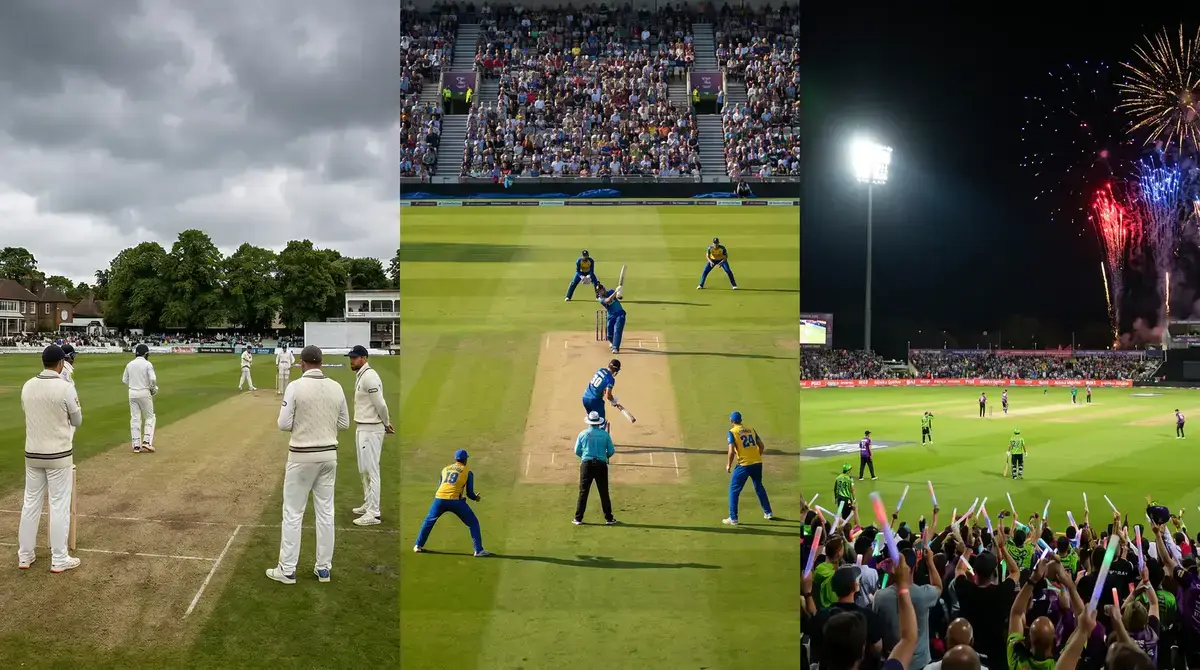
If you have ever tried applying the same betting strategy to a Test match and a T20, you already know why this section exists. The three formats of cricket are so different in structure, pace, and outcome distribution that they might as well be different sports when it comes to market behaviour.
Test cricket stretches across five days and up to 450 overs per side. That duration creates markets you will never see in limited-overs cricket: draw, session betting (runs scored in a morning, afternoon, or evening session), day-by-day top batsman, and declaration timing. The draw market alone is a world unto itself. Weather, pitch deterioration on days four and five, and the tactical calculus of declarations all feed into draw pricing. I have seen the draw shorten from 5/1 before a Test to 6/4 by the end of day three after rain wiped out most of the second day’s play. Bettors who track weather forecasts closely can find genuine value in the draw market before the bookmakers adjust.
ODI cricket — 50 overs per side — sits in the middle ground. The match is long enough for momentum shifts but short enough that draws are virtually impossible (a tie or no-result is rare). ODI markets include match winner, top batsman and bowler for each innings, total match runs, total match sixes, and milestone markets like “will a century be scored.” The run-scoring patterns in ODIs create a distinctive shape: conservative starts in the first powerplay, acceleration through the middle overs, and an explosion in the death overs. Smart bettors use those phases to time their in-play entries rather than betting on the match as a monolithic event.
T20 compresses everything into roughly three hours. The UK cricket betting market generates approximately 52 million pounds annually — around 2.2% of the nation’s online sports betting sector — and T20 competitions like the IPL, The Hundred, and the T20 Blast account for a disproportionate share of that volume. T20 markets move fast: match winner odds can swing by 30% or more after a single big over. The total sixes market is far more popular in T20 than in any other format because six-hitting is central to the format’s identity. Player strike-rate markets appear in T20 but not in Test cricket, because strike rate carries different strategic weight in a 20-over contest.
The Hundred, with its 100-ball format, has introduced its own quirks. Because overs are replaced by sets of five or ten balls from the same bowler, the traditional “runs in the over” market doesn’t apply in the same way. Bookmakers have adapted by offering “runs in the next five balls” and “runs in the next ten balls” as alternatives. If you are accustomed to T20 markets, The Hundred will feel similar but not identical — pay attention to the subtle differences in market construction before assuming your T20 instincts translate directly.
Outright and Futures Markets
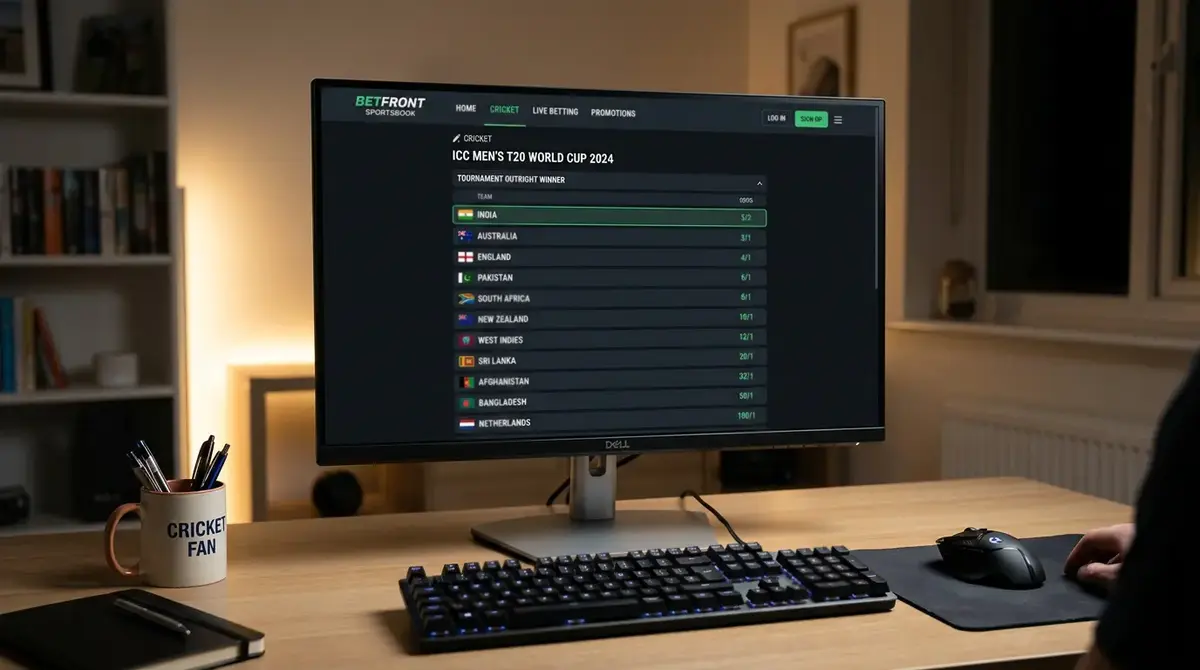
Outright markets ask you to predict the winner of an entire tournament or series rather than a single match. They open months in advance and stay live throughout the competition, with odds adjusting after every result.
I backed England to win the 2025 Ashes series at 3/1 before the first Test. By the end of the second Test — which England won comprehensively — the price had collapsed to 8/11. That price movement illustrates the opportunity and the risk of outright betting: if you are right early, the value is enormous, but your money is tied up for weeks or months. Outright markets reward bettors who form pre-tournament views based on squad analysis, conditions assessment, and historical performance rather than reacting to early results.
Tournament outrights for the IPL, T20 World Cup, and The Hundred typically attract the highest volume. Series outrights for the Ashes and bilateral Test series also draw strong interest. Less popular but often overlooked are top tournament batsman and top tournament bowler outrights, which function like player performance markets but across an entire competition. Pricing on these longer-range markets tends to be less efficient than single-match markets because the bookmaker is forecasting over a much larger set of variables — injuries, form fluctuations, rest rotation, weather across multiple venues.
One practical consideration: settlement rules vary. Some bookmakers settle outright markets based on the official result; others have specific rules for tournaments that are abandoned or restructured mid-competition. Before placing an outright bet on a long tournament, read the settlement terms. I learned this the hard way during a tournament that was curtailed due to rain, where one bookmaker voided all outright bets and another settled based on the standings at the point of abandonment. Same bet, different outcomes, different rules.
Exotic and Prop Bets in Cricket
Prop bets sit at the entertaining end of the spectrum. They are not the bets I build a strategy around, but they make watching cricket more engaging, and occasionally they offer value that mainstream markets miss.
Method of first dismissal is a favourite of mine. The options — bowled, caught, LBW, run out, stumped — each carry distinct probabilities that shift based on conditions, format, and the specific bowler operating. In a seaming Test match, “caught” dominates because edges carry to the slip cordon. On a slow, turning pitch, “stumped” becomes a realistic option when spinners are bowling to attacking batsmen. I have found bookmakers sometimes underprice “bowled” in T20 matches because the aggressive batting approach increases the frequency of clean bowled dismissals.
Other exotic markets include: will there be a run out in the match, the number of wides in an innings, the highest individual score band (0-24, 25-49, 50-74, 75+), and whether a hat-trick will be taken. Some bookmakers offer “first ball of the match” markets — will it be a dot, a run, a wide, or a boundary? These are essentially coin-flip bets with slightly negative expected value, but they add entertainment for bettors who enjoy the theatre of the first delivery.
Specials and enhanced odds propositions appear around major tournaments. “Will there be a century in the final?” or “will the toss winner choose to bat?” crop up during marquee events like the IPL final or an Ashes decider. These markets are priced with wider margins because liquidity is thin and the bookmaker needs to protect against sharp action. Treat them as fun diversions rather than serious edges unless you have a very specific information advantage.
Questions About Cricket Betting Markets
These questions come up consistently in conversations with bettors who are expanding beyond the match winner market for the first time.
Articles
Prepared by the cricketbettingwebsites.com editorial staff.
