

The total gross gambling yield from remote casino, betting, and bingo operations in the UK reached 7.8 billion pounds in the year ending March 2025 — a 13.1% increase year on year. That figure represents an industry operating under one of the most rigorous regulatory frameworks in the world, administered by the UK Gambling Commission. Every pound wagered through a UKGC-licensed operator is governed by rules designed to protect the bettor. Every pound wagered through an unlicensed operator is not.
I have seen bettors chase slightly better odds on offshore platforms that lack UKGC licensing, only to discover that their withdrawal has been “under review” for six weeks, or that the bonus they were promised has conditions buried in terms they cannot access. The UKGC licence is not a rubber stamp. It is a set of enforceable obligations that directly affect your experience as a bettor — from how your funds are held to what happens when you have a dispute.
What a UKGC Licence Guarantees for Bettors
Andrew Rhodes, who led the Gambling Commission through a period of significant regulatory change, described leaving the organisation with “confidence in the organisation, its people and the work still to come.” That confidence reflects a regulatory body that has strengthened its enforcement consistently over the past decade. For bettors, the practical guarantees are concrete.

Fund segregation is the most important. UKGC-licensed operators must keep customer funds separate from operational funds, which means your balance is protected if the company faces financial difficulties. The level of protection varies — some operators hold funds in a segregated account with a third-party trustee, while others use a less robust “medium” or “basic” protection model. You can check which level your operator uses on the UKGC’s public register.
Fairness standards require that all odds and game outcomes are transparent and verifiable. For cricket betting, this means the odds you see when you place a bet are the odds you get, and settlements must follow the published rules. If a match is abandoned and your bookmaker settles your bet in a way that contradicts their own terms, you have recourse through the UKGC’s complaint framework.

Advertising standards prevent UKGC-licensed operators from targeting minors, making misleading claims about bonus offers, or using manipulative urgency tactics. If an operator sends you an email saying “your exclusive offer expires in 2 hours” and that offer is available to everyone, that is a breach of advertising standards. These rules do not eliminate aggressive marketing, but they set a floor below which licensed operators cannot operate.
How to Check a Bookmaker’s Licence Status
Approximately 310 businesses are directly affected by the current gambling duty reforms, including around 160 remote betting providers, 95 remote gaming operators, and 55 combined operators. Each of these holds (or is required to hold) a UKGC licence to operate legally in the UK. Checking whether your chosen cricket betting site is among them takes less than a minute.

The UKGC maintains a public register at its official website. Enter the operator’s name, and the register returns their licence status, the type of licence held, and any regulatory actions taken against them. If the operator does not appear on the register, they are not licensed to offer gambling services to UK consumers. Full stop.
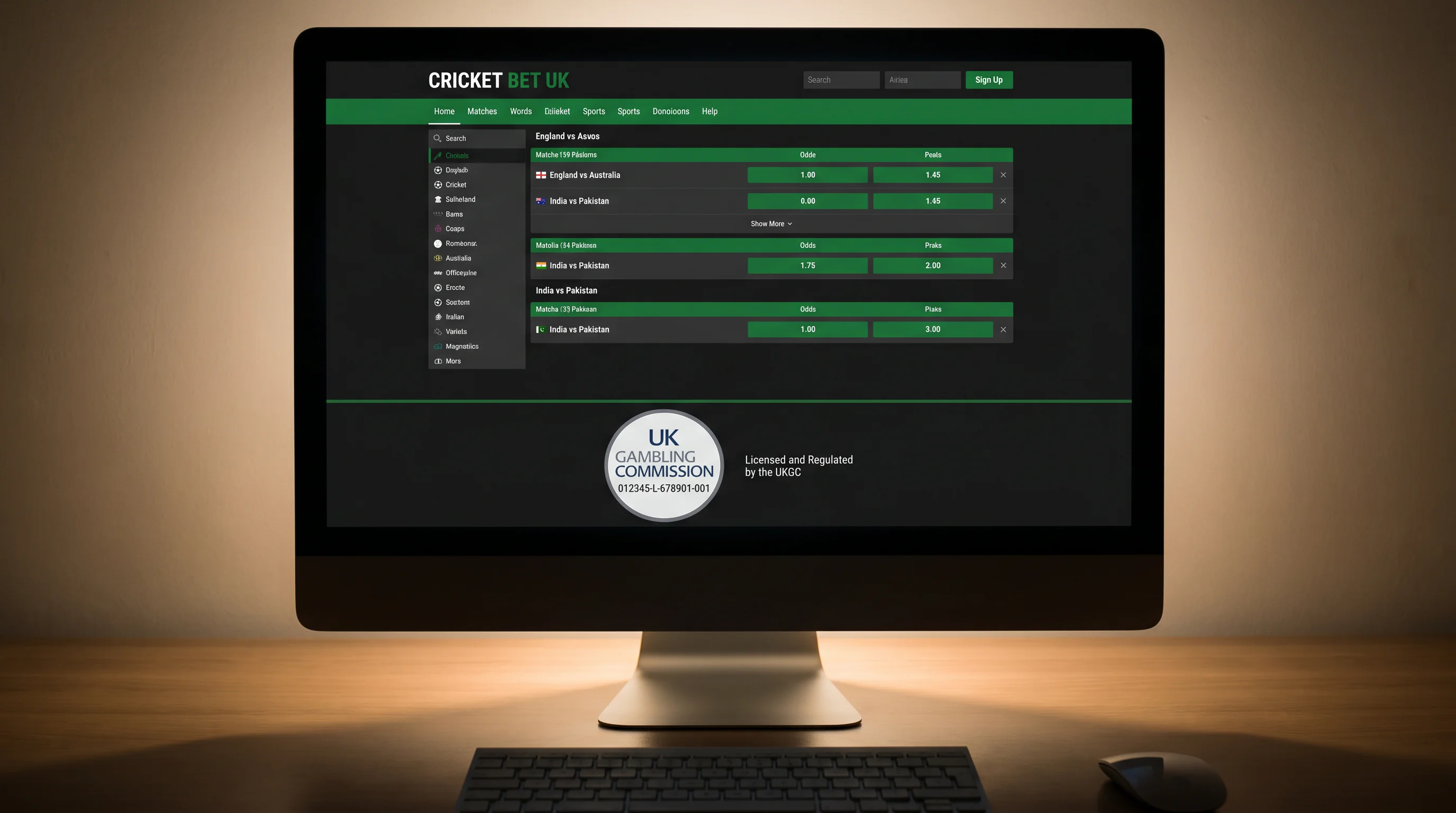
Most UKGC-licensed operators also display their licence number in their website footer, alongside the Gambling Commission logo. Clicking that logo should link to the UKGC’s register page for that specific operator. If the logo is present but the link is dead, broken, or leads to a generic page rather than a specific licence entry, treat that as a red flag.
I check the register whenever I encounter a new cricket betting site. It has saved me from creating accounts with operators whose “licence pending” status was actually “licence never applied for.”
Risks of Using Unlicensed Cricket Betting Sites
The risks are not theoretical. Unlicensed operators are under no obligation to segregate customer funds, settle bets fairly, or respond to complaints. If an unlicensed site refuses to pay out a winning cricket bet, your options are limited to posting on forums and hoping social pressure produces a result. There is no ombudsman, no regulatory body, and no legal framework that applies.

Withdrawal delays are the most common issue with unlicensed operators. The pattern is predictable: deposits are instant, but withdrawals require “verification” that takes days or weeks. Some operators impose undisclosed withdrawal limits that are not mentioned in the terms until you try to cash out a significant win. Others change bonus terms retroactively, clawing back winnings that were earned under the original conditions.

Data security is another concern. UKGC-licensed operators must comply with UK data protection regulations, including GDPR. Unlicensed operators, particularly those based outside the UK, may not adhere to the same standards. Your personal and financial information — passport scans, bank details, proof of address — is stored by every betting site you register with, and the security of that storage depends entirely on the operator’s internal practices.
Complaint and Dispute Resolution Under UKGC Rules
Every UKGC-licensed operator must provide access to an independent Alternative Dispute Resolution (ADR) service. If you have a dispute with your bookmaker — a bet that was settled incorrectly, a bonus that was not credited, a withdrawal that has been unreasonably delayed — and the operator’s internal complaints process does not resolve the issue, you can escalate to the ADR provider listed on the operator’s website.

The ADR process is free for the bettor. The provider reviews the dispute, examines the operator’s terms and the facts of the case, and issues a decision. While ADR decisions are not legally binding in the same way as a court judgment, operators that refuse to comply with ADR rulings face regulatory consequences from the UKGC.
I have used the ADR process once, over a settlement dispute on a county cricket match that was reduced to three days due to a waterlogged outfield. The bookmaker settled my match-winner bet as void; I argued that their terms specified settlement based on the match result regardless of duration. The ADR provider agreed with my reading, and the bet was resettled in my favour within two weeks. That outcome was possible only because the operator was UKGC-licensed and bound by the ADR framework. For a related discussion on the regulatory tools that protect bettors beyond licensing, responsible gambling for cricket bettors covers the available safeguards.
Articles
Created by the "cricketbettingwebsites.com" editorial team.
