


The ECB has stated that the relationship between gambling and sport needs to be conducted responsibly to protect the sporting community, including its participants and supporters, from gambling-related harm. That principle sounds straightforward. The reality behind it is a continuous, high-stakes effort to keep betting markets honest and the sport free from corruption — an effort that directly affects every UK cricket bettor, whether they realise it or not.
I have covered match integrity as part of my work for most of the last nine years, and the single most important thing I can tell you is this: a clean market is a fair market. When a match is played without corrupt interference, the odds reflect genuine probabilities. When it is not, the odds are distorted, and the bettor is wagering into a rigged game. Understanding how anti-corruption measures work is not an academic exercise — it is a practical matter of protecting the value of your bets.
The ICC Anti-Corruption Unit and Cricket Betting
The total volume of bets placed on a single IPL season is estimated at 150 billion dollars when unregulated markets are included. That number alone explains why cricket is a target for corruption — the sums involved are enormous, and the incentive structure for fixers is correspondingly powerful. The ICC’s Anti-Corruption Unit exists to counter that threat across international cricket and has expanded its scope significantly in recent years.

The ACU operates on multiple fronts. It educates players and officials about the types of approaches they may receive — often framed as harmless information-sharing before escalating to corrupt requests. It monitors betting markets for suspicious patterns, working with regulated bookmakers who are required to report unusual activity. And it investigates cases directly, with the authority to charge players and officials under the ICC Anti-Corruption Code.
The ACU has acknowledged that advancing technology and increasing popularity have led to a substantial increase in the amount and sophistication of betting on cricket matches. The rapid growth of mobile and in-play betting markets has increased exposure to corruption risks, particularly in associate-level competitions where player salaries are low and oversight is thinner. That is a direct warning to bettors: not all cricket matches carry the same integrity risk, and the level of competition you bet on matters.

High-profile events — international Tests, ODIs between Full Members, and franchise leagues like the IPL and The Hundred — carry the lowest integrity risk because oversight is most intense. Associate-level internationals, lower-tier domestic leagues, and events in countries without robust anti-corruption frameworks carry higher risk. I factor this into my market selection: I do not bet on competitions where I cannot assess the integrity environment, regardless of how attractive the odds look.
ECB Gambling Code of Conduct
The ECB’s gambling code applies to all participants in English cricket — players, coaches, support staff, and officials. The rules are clear: participants may not bet on any cricket match anywhere in the world, may not share inside information for betting purposes, and may not facilitate or encourage any other person to bet on cricket. Violations carry sanctions ranging from suspensions to lifetime bans.

For bettors, the ECB code matters because it defines the regulatory environment surrounding English domestic cricket. When you bet on a County Championship match or a Hundred fixture, you are betting on an event governed by one of the most stringent gambling codes in world cricket. That gives a degree of confidence that the market is clean — not a guarantee, but a meaningful structural protection.
The code also governs the relationship between cricket and betting sponsors. Shirt sponsorship by betting companies, pitch-side advertising, and broadcast partnerships are all subject to ECB guidelines that aim to prevent conflicts of interest. The whistle-to-whistle advertising ban — which restricts gambling advertisements during live broadcast coverage before 9pm — has been one of the most visible manifestations of this approach, and it has demonstrably reduced children’s exposure to betting advertising during cricket coverage.
Spot-Fixing Risks in Modern Cricket
Match-fixing — where the overall result of a match is predetermined — is the most dramatic form of corruption, but spot-fixing is the more common threat in modern cricket. Spot-fixing involves manipulating a specific moment within a match: a no-ball bowled at an agreed delivery, an over deliberately conceding a set number of runs, or a batsman getting out in a particular manner at a prearranged point.
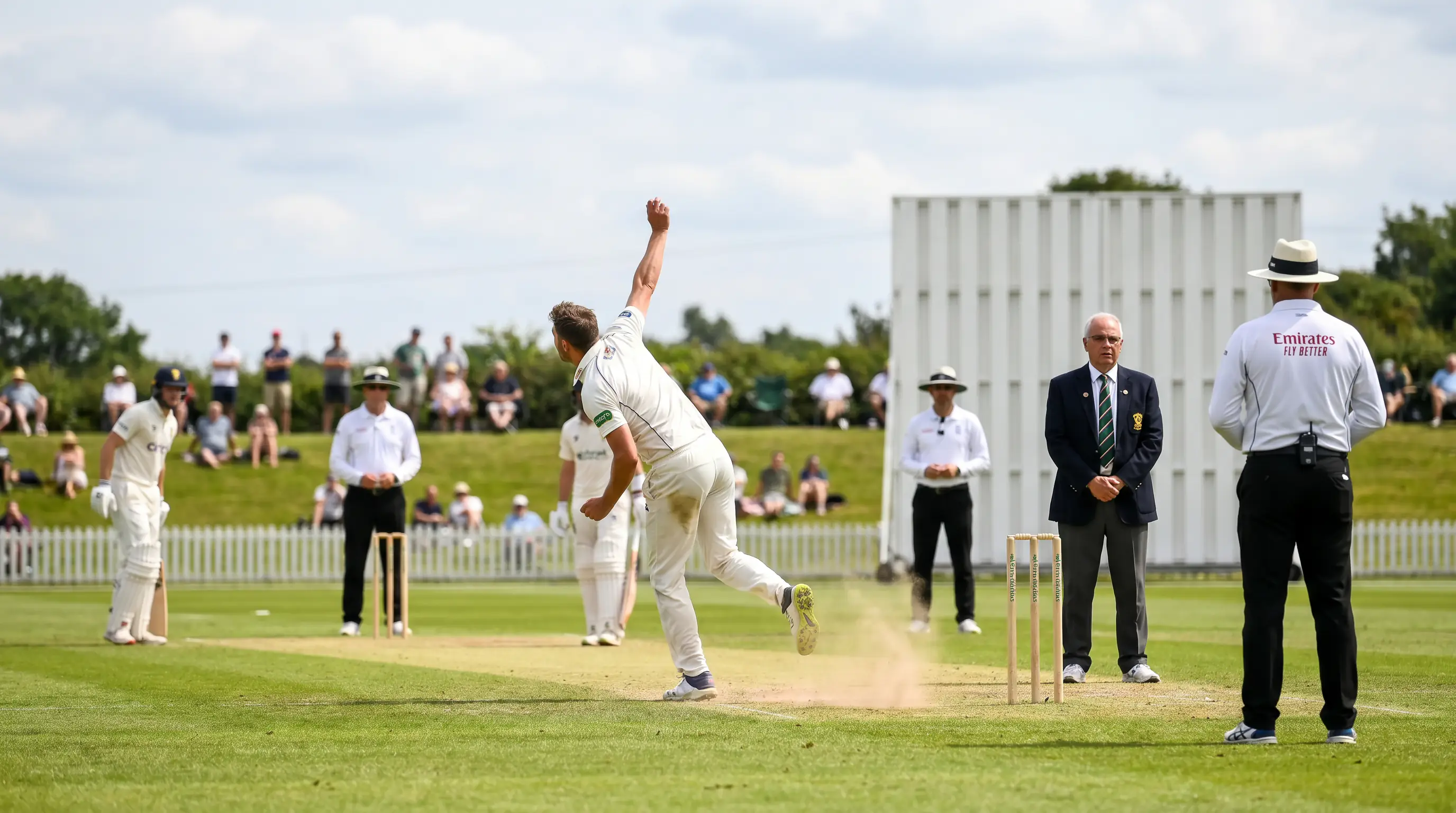
Spot-fixing is harder to detect than match-fixing because it does not necessarily affect the result. A bowler who deliberately bowls a no-ball in the third over of a match may have zero impact on who wins, but a bettor who knew that no-ball was coming could profit from the “next ball” or “runs in the over” micro-market. The growth of ball-by-ball and delivery-specific betting markets has expanded the surface area for spot-fixing, because there are now more micro-events within a match that can be isolated and manipulated.

Among online sports bettors, 7.2% show levels of problem gambling on the full PGSI scale — and problem gambling and vulnerability to corruption are correlated. The financial pressures that drive problem gambling in bettors can also drive corrupt behaviour in players, particularly in lower-paid competitions. The integrity challenge is systemic, not just individual, and addressing it requires action on both sides of the market.
What does this mean practically? If you notice prices moving sharply on a micro-market — next ball outcome, runs in a specific over — in a lower-profile match, treat that movement with caution. It may reflect a legitimate view from an informed bettor, or it may reflect something else entirely. I avoid micro-market betting on competitions below the top tier specifically because the integrity risk is harder to assess.
What UK Bettors Should Watch For
Betting with UKGC-licensed operators is the first and most important protection. Licensed operators are required to report suspicious betting patterns to the relevant governing body and to the Gambling Commission. That reporting obligation creates a feedback loop: unusual market activity triggers investigation, which either clears the market or identifies a problem. Unlicensed operators have no such obligation, and betting through them means you are operating without that safety net.

Beyond licensing, watch for markets that behave unusually. Sudden, sharp odds movements on minor markets — particularly in lower-tier competitions — can be a signal of informed money entering the market. That informed money may be legitimate (a bettor with superior knowledge of conditions or team news) or it may not be. If a market moves in a way you cannot explain, stepping away is the prudent response.
Stay informed about integrity sanctions. The ICC publishes outcomes of anti-corruption investigations, including player suspensions and bans. If a player involved in a match you are considering betting on has a history of integrity issues, that is relevant context for your decision — not because past sanctions guarantee future problems, but because they indicate a higher baseline risk. For a broader understanding of how UK licensing protects bettors across all markets, UKGC licensed cricket betting sites covers the full framework.
Articles
Prepared by the cricketbettingwebsites.com editorial staff.
