


William Hill and bet365 together capture over 50% of the click share in UK sports betting search advertising. That duopoly of attention means most bettors default to one of these two platforms without checking whether the price they are getting is the best available. For cricket, where margins can vary by 10-15% between operators on the same match, that default costs real money over a season.
I run a personal spreadsheet that tracks the match-winner odds offered by five different bookmakers for every international cricket fixture I consider betting on. The exercise takes about three minutes per match, and the cumulative difference in my returns over a year is material. Odds comparison is not glamorous work — it is the betting equivalent of checking petrol prices across three nearby stations — but it is the simplest way to improve your long-term results without changing anything else about your approach.
Why Comparing Cricket Odds Matters
Approximately 10% of the UK population actively participates in online sports betting. Most of them use a single bookmaker. That loyalty is expensive. Every bookmaker builds a margin into their odds — the overround — and the size of that margin varies between operators and between sports. Cricket, because it attracts less betting volume than football, often carries wider margins, which makes comparison even more important.
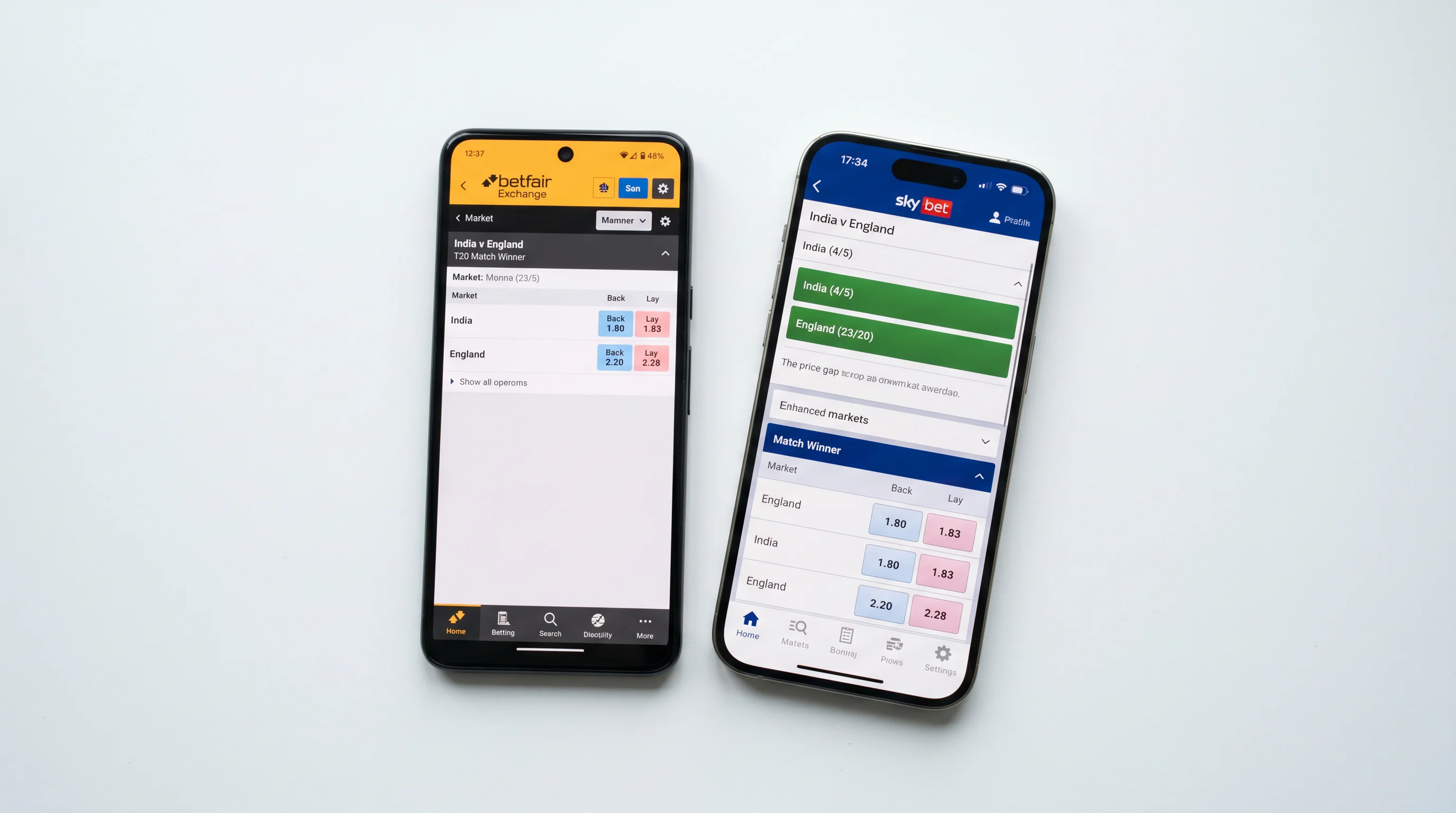
Here is a concrete example. For a T20 international between two evenly matched sides, one bookmaker might offer both teams at 10/11 (implied overround of about 105%). A second bookmaker might offer the same match at 5/6 each side (implied overround of about 109%). The difference in your expected return between betting at 10/11 versus 5/6 is roughly 4% per bet. Over 100 bets at 10-pound stakes, that difference is 40 pounds — not enough to change your life, but enough to cover several months of losing bets.

The disparity is even more pronounced on less liquid markets. Top batsman, over/under runs, and outright tournament winner markets show wider variation between bookmakers than match-winner markets because fewer operators price them competitively. I have seen top-batsman odds for the same player in the same match range from 7/2 at one operator to 4/1 at another — a 14% difference in implied probability. That is not a marginal edge; that is a substantial pricing discrepancy that makes or breaks profitability.
How to Compare Cricket Odds Effectively
The most direct method is to open the cricket section on three or four bookmakers simultaneously and compare prices for the same market. This works for pre-match markets on major fixtures but becomes impractical for in-play betting, where odds change every few seconds. For in-play comparison, you need to decide on your preferred operator in advance based on their general pricing tendencies for cricket rather than comparing in real time.

Focus your comparison on the markets where you actually bet. If you exclusively wager on match winners, compare match-winner odds and ignore the rest. If you specialise in player performance markets, compare top-batsman and top-bowler prices. Comparing every available market across every operator is a time sink that does not proportionally improve your results.
Check odds at two specific moments: when the market first opens (usually 48-72 hours before the match) and again immediately before play begins. Early prices often offer value because the bookmaker is less certain of its pricing and builds a larger margin as a buffer. Late prices — after team news, toss results, and the weight of early money have shaped the market — are typically sharper but may have moved away from any early value.
One habit that saves time: identify which bookmaker consistently offers the best cricket prices over a two-week period and make it your default for that sport. You do not need to compare every match if you know that one operator systematically prices cricket two or three percent tighter than the others. Reassess quarterly, because operator pricing strategies shift over time.
Understanding Bookmaker Margin on Cricket
Neal Menashe, CEO of Super Group, noted that his company supports reasonable taxation but stressed the need for enforcement against non-paying offshore operators to protect the regulated sector’s investment. That tension between taxation, regulation, and competitiveness flows directly into the margins bookmakers charge. Higher tax burdens — like the Remote Gaming Duty increase from 21% to 40% in April 2026 — put upward pressure on margins because operators need to maintain profitability on reduced net revenue.
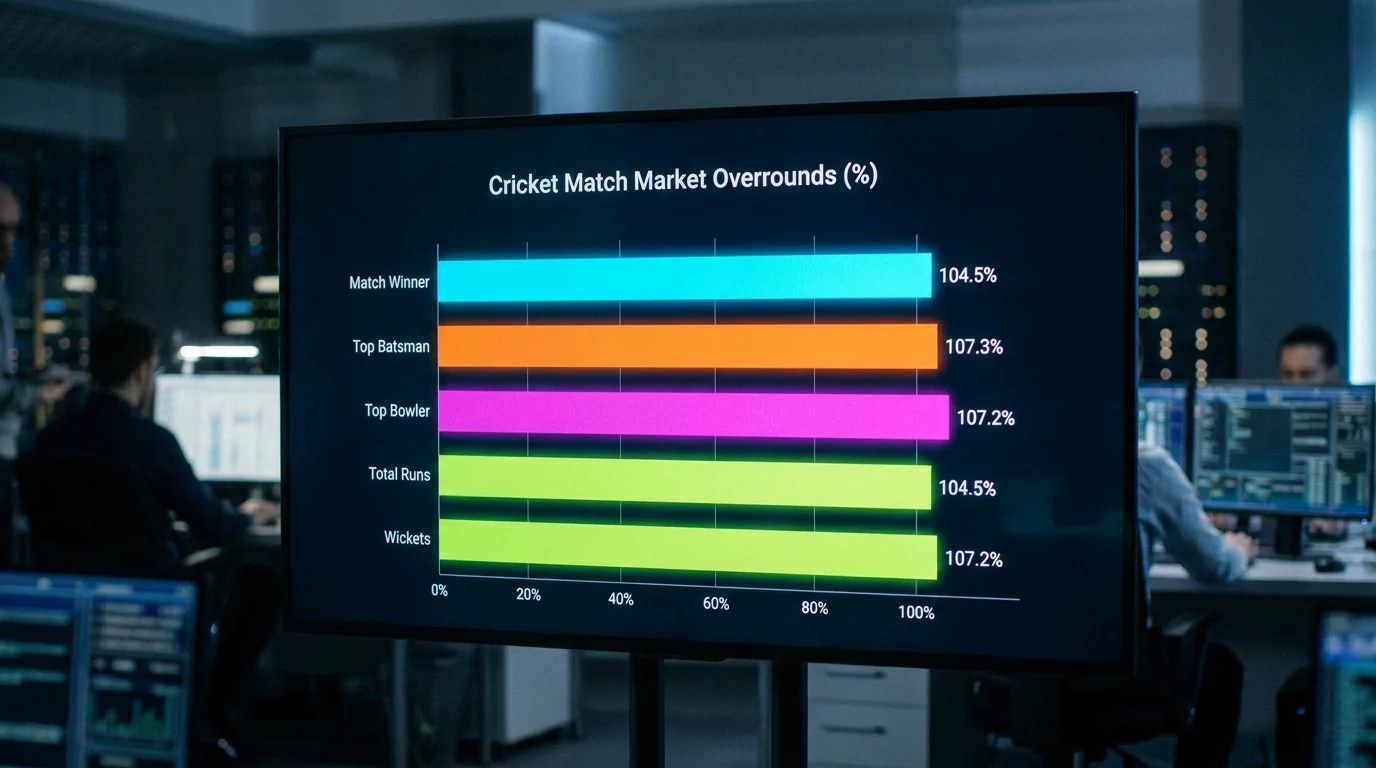
Calculating the margin on a two-way cricket market is straightforward. Convert both prices to implied probabilities and add them. If the total is 105%, the margin is 5%. For a three-way market (Test match with a draw), convert all three prices and add them. A total of 108% means an 8% margin. The lower the margin, the better the value for the bettor.

Cricket margins tend to run higher than football margins on the same operators. A Premier League match might carry a 3-4% margin on the match-winner market, while a T20 international on the same platform might carry a 5-7% margin. This reflects the lower betting volume on cricket, which gives the bookmaker less confidence in its pricing and less incentive to compete on margin. Understanding this structural difference helps you calibrate your expectations — a 5% margin on cricket is competitive, whereas the same margin on a Premier League match would be expensive.
Watch for margin variation across competitions. IPL and Ashes matches typically carry the tightest cricket margins because they attract the most betting volume. Bilateral ODI series between mid-ranked nations and domestic county matches carry wider margins. If you are betting on lower-profile cricket, the margin you are paying is higher, and the value of comparison shopping is correspondingly greater.
Odds Comparison Tools for UK Cricket Bettors
Several independent websites aggregate odds from multiple UK bookmakers and display them side by side for each market. These tools are useful for quick comparison but have limitations. Not all of them cover cricket comprehensively — football dominates the listings, and cricket coverage is often limited to international fixtures and major franchise leagues. Player markets, totals, and exotic props are rarely included.

The best approach is to combine automated comparison tools with manual checking. Use the aggregation sites for match-winner and over/under markets on major fixtures, where the data is reliable and up to date. For player markets and less common bet types, open the individual bookmaker sites and compare directly.
One feature worth prioritising: best-odds-guaranteed promotions. Some UK bookmakers offer this on cricket, meaning that if the starting price is higher than the odds you took when you placed your bet, you receive the better price. This effectively provides free upside and reduces the cost of taking early prices before the market moves. Not all operators offer best-odds-guaranteed on cricket — it is more common on horse racing — but those that do give you a structural advantage on early-market bets. For a complementary approach to securing better prices through a different market structure, cricket betting exchanges offer an alternative to traditional bookmaker odds.
Articles
Prepared by the cricketbettingwebsites.com editorial staff.
