

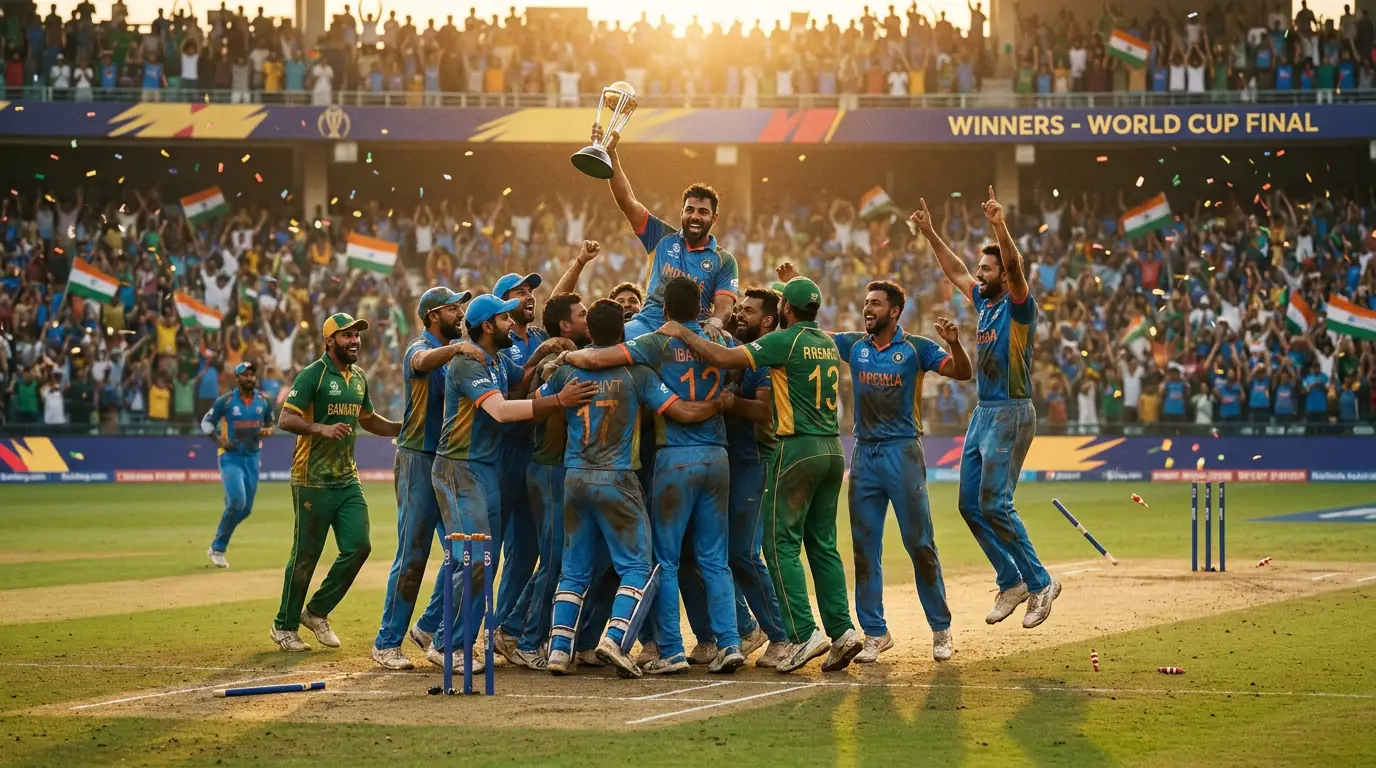
The UK cricket betting market generates approximately 52 million pounds annually, and the match winner market accounts for the largest share of that volume by a considerable margin. It is the first market most bettors look at, the simplest to understand, and — when approached with discipline — one of the most consistently tradeable. But simplicity is not the same as straightforwardness, and the mechanics of match winner betting carry nuances that separate profitable bettors from the crowd.
I have placed thousands of match winner bets across Test, ODI, and T20 formats over nine years. The most expensive lessons came early, when I did not understand that a “match winner” market is not the same thing across all formats — the number of possible outcomes changes, the settlement rules change, and the factors that move the odds change. This market rewards bettors who understand its mechanics rather than those who simply pick the team they think will win.
Two-Way vs Three-Way Match Winner Markets
The fundamental distinction in match winner betting is between two-way and three-way markets. In T20 and ODI cricket, the match winner market is two-way: Team A wins or Team B wins. Ties in limited-overs cricket are decided by Super Over or other tiebreaker rules, so a draw is not a possible outcome. The odds add up to slightly over 100% (the bookmaker’s overround), and you are choosing between two options.

In Test cricket, the match winner market is three-way: Team A wins, Team B wins, or the match is drawn. The draw is a genuine third outcome with its own price, and it fundamentally changes the dynamics of the market. A Test match where both sides are evenly matched might be priced at 5/2 for each team and 9/4 for the draw — three distinct prices, each reflecting a different scenario. Betting on a Test match winner without considering the draw probability is like evaluating a three-horse race while ignoring one of the runners.
The practical implication: match winner odds in Test cricket are always longer than they would be in a hypothetical two-way Test market, because the draw absorbs a portion of the probability. A team with a 40% win probability in a three-way Test market might be priced around 6/4, whereas the same 40% probability in a two-way market would be priced around 6/5. The draw is not just a third option — it lengthens the prices on both teams, which creates both risk and opportunity.

What Moves Match Winner Odds
Roughly 7% of UK sports bettors wager on cricket, and their collective activity shapes the odds alongside the bookmaker’s own assessment. Several factors move match winner prices, and understanding them helps you anticipate where value may appear.
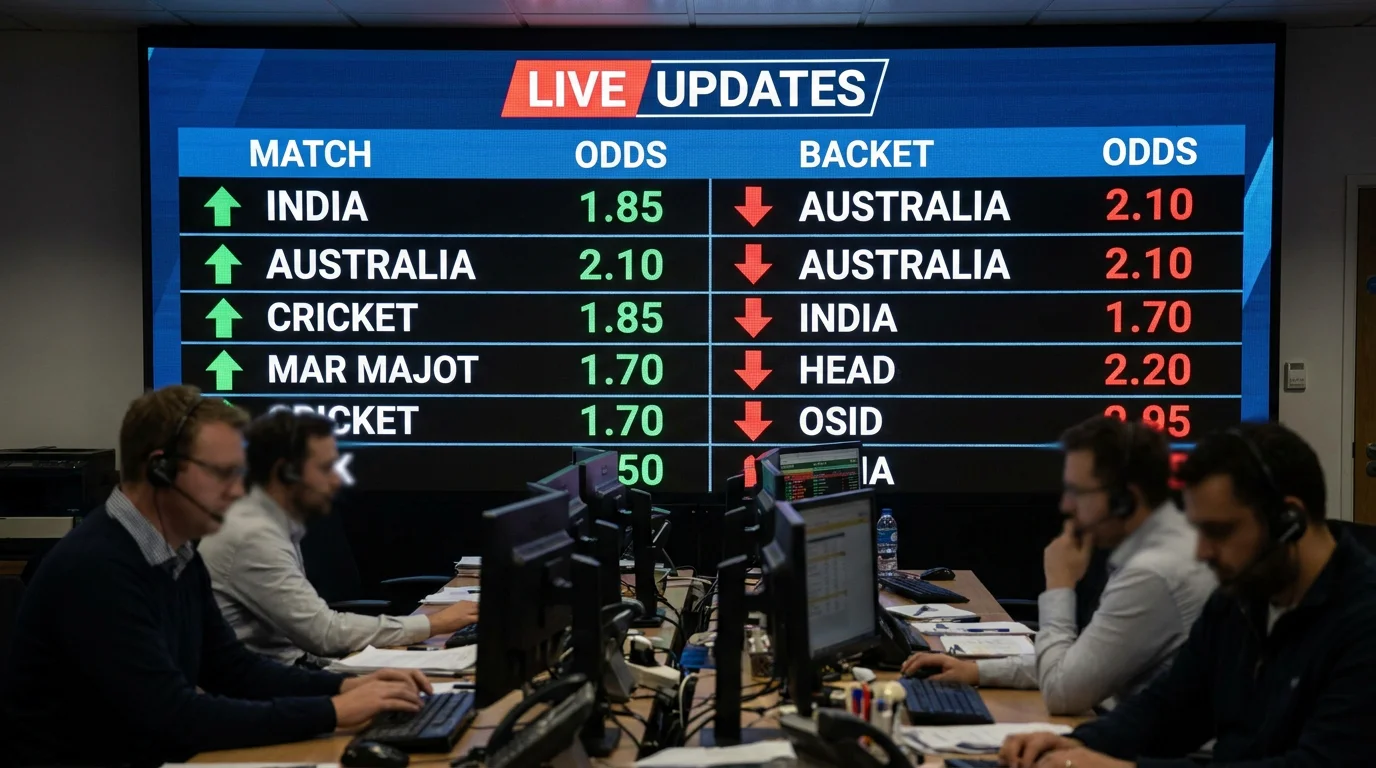
Team news is the most common driver. When a squad is announced or a playing eleven is confirmed, the match winner odds adjust immediately. The absence of a key player — a frontline fast bowler with an injury, a star batsman rested for rotation — can move odds by several points. The market reaction to team news is fast for international cricket (minutes) and slower for domestic competitions (hours), which creates a window of opportunity for attentive bettors watching lower-profile fixtures.
The toss is the second major catalyst. In T20 cricket, the toss winner often chooses to chase, and the chasing side has a statistical advantage at many venues. The match winner odds adjust the moment the toss result is announced, sometimes by 10-15% in implied probability. If you have a pre-match view on the match and plan to bet after the toss, wait for the toss result — the price on your preferred side may improve if they lose the toss and the market overreacts to the perceived disadvantage.
Weather forecasts, pitch reports, and head-to-head records also influence pricing. In Test cricket, weather is particularly important because rain can reduce playing time and increase the draw probability, which in turn lengthens the prices on both teams winning. A weather forecast showing rain on day three of a Test match is bearish for both win prices and bullish for the draw.
Settlement Rules by Format
The ICC’s Anti-Corruption Unit has noted that advancing technology and increasing popularity have led to a substantial increase in betting on cricket matches. With that increase comes a wider range of settlement scenarios, and knowing the rules for your specific bet type prevents unpleasant surprises.
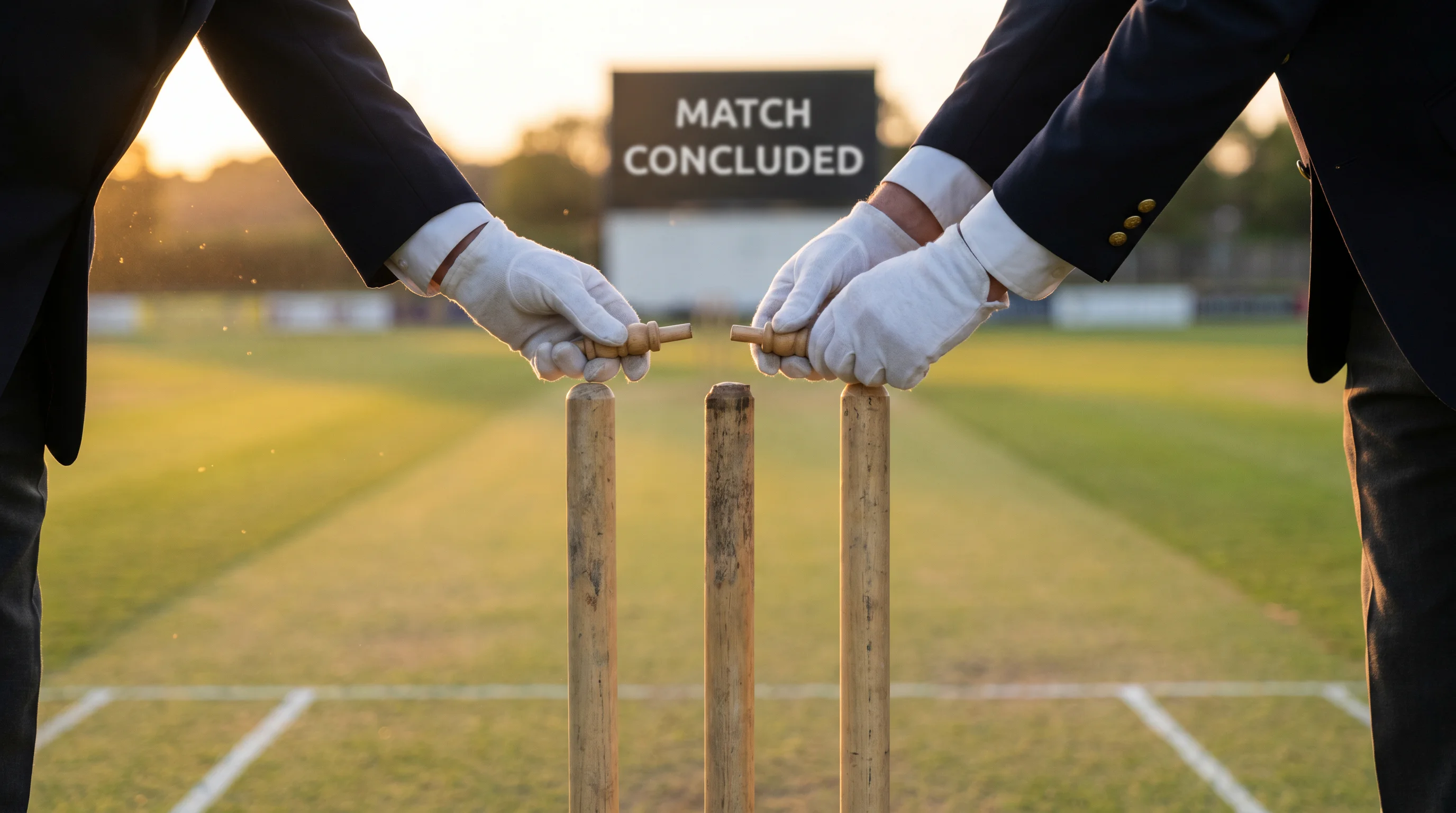
T20 settlement is the cleanest: if a result is achieved (including via DLS method or Super Over), the bet is settled accordingly. If the match is abandoned without a result, bets are typically voided and stakes returned. If the match is reduced by rain and a DLS target is applied, the match winner is determined by the DLS method, and bets settle based on that result.

ODI settlement follows the same structure but with additional edge cases. If a match is tied and no Super Over is played (rare but possible in bilateral series where no tiebreaker rule applies), some operators void match winner bets while others settle as a dead heat. Check your operator’s rules for the specific series before betting.
Test match settlement is more complex. A match that is drawn settles as a draw — team win bets lose, draw bets win. A match abandoned without a ball bowled is voided. A match abandoned after play has started but before a result is achieved is typically settled as a draw, but operator rules vary. The tied Test — both sides bowled out in their final innings with identical scores — is settled by some operators as a dead heat on team win bets and by others as a void. Tied Tests have occurred only twice in history, but knowing the rule prevents confusion if the improbable happens.
Identifying Value in Match Winner Prices
Value in match winner betting means backing a team at odds that imply a lower win probability than you believe to be true. If you assess a team’s genuine win probability at 55% but the market prices them at odds implying 45%, the difference is your edge. Finding that edge consistently requires a model — formal or informal — that estimates win probabilities independently of the market.

My model is built on four inputs: team form over the last five matches in the same format, head-to-head record at the venue, individual player matchup data (key batsmen against the opposition’s bowling attack), and conditions (pitch type, weather, time of year). I weight these inputs differently by format: conditions carry more weight in Tests, team form carries more weight in T20. The output is a probability estimate that I compare to the bookmaker’s implied probability. If the gap is at least 5%, I consider the bet.
One consistent source of value: the market tends to overreact to recent results. A team that has lost three consecutive matches is often priced longer than their underlying quality warrants, because the betting public anchors on the losing streak. Similarly, a team on a winning run is often priced shorter than justified. Regression to the mean is a powerful force in cricket, and the market does not always price it correctly. For a related market that eliminates one outcome from the equation, draw no bet in cricket covers how to remove the draw from your Test match positions.
Articles
Prepared by the cricketbettingwebsites.com editorial staff.
