

Rain at Edgbaston, 2023. I had backed England at 6/4 on the three-way match result, and two full days were lost to weather. The match petered out into a draw, and my stake vanished. That was the last time I used the standard three-way market for a Test match at an English ground in early season without seriously considering draw no bet as an alternative. The lesson cost me money, but it bought me a principle: when the draw is a genuine contender, DNB is not a cautious option — it is the analytically correct one.
Draw no bet removes the draw outcome from the equation entirely. You back a side to win, and if the match ends in a draw, your stake is returned. The trade-off is shorter odds — you are paying for insurance against the draw — but in situations where the draw probability is meaningful, that insurance can transform a losing position into a neutral one.
How Draw No Bet Works in Cricket
Live betting accounts for roughly 30% of all online sports wagers in the UK, and DNB is a pre-match market that many bettors use as a foundation for their in-play strategy. The mechanics are simple. In a standard three-way Test match market, you have three options: Team A wins, Team B wins, or draw. Each has its own price. In the DNB market, the draw is removed, and you are left with two options: Team A wins or Team B wins. If neither side wins — i.e., the match is drawn — your bet is void and your stake is returned.

The pricing reflects the removal of the draw outcome. If the three-way market has Team A at 6/4, Team B at 2/1, and the draw at 5/2, the DNB market will price Team A shorter (perhaps 4/5) and Team B shorter (perhaps 6/5). The exact DNB prices depend on the implied draw probability — the higher the draw probability, the bigger the price compression.
This compression is the cost of insurance. You are giving up a portion of your potential return in exchange for protection against the draw. Whether that trade-off is worthwhile depends entirely on how likely you think the draw is. If you believe the draw is more likely than the market implies, DNB offers value by eliminating an outcome you were worried about at a price that underestimates its probability.
When DNB Offers Value in Test and ODI Cricket
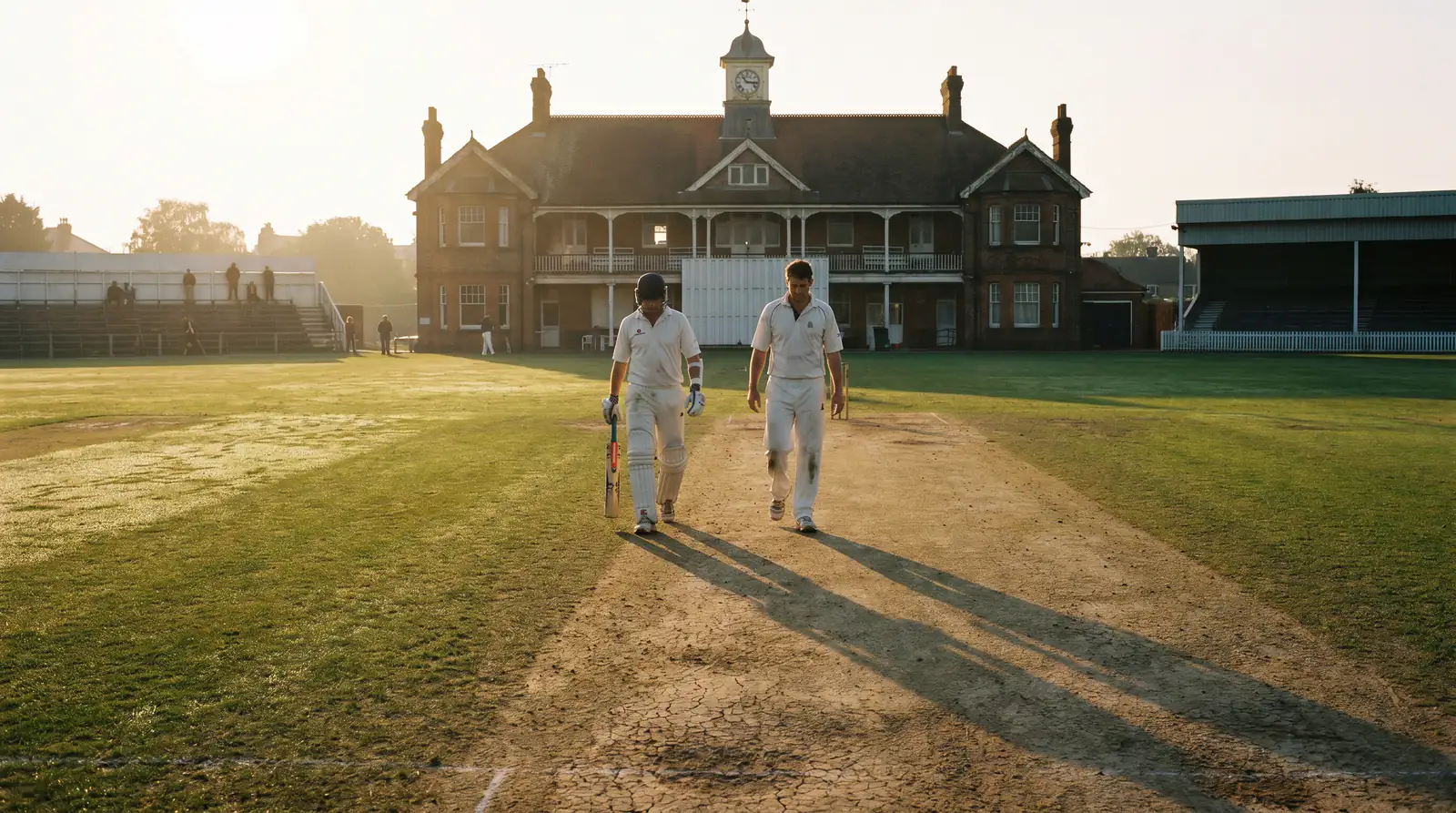
Live in-play cricket betting makes up between 55 and 60% of all cricket wagers in the UK, but the real value of DNB lies in pre-match decision-making, particularly for Test matches. The draw is a realistic outcome in Test cricket — five-day matches can be affected by weather, slow over rates, flat pitches, and defensive captaincy. In ODI cricket, draws are rare (they require a tie or abandonment under specific conditions), so DNB is less commonly relevant.
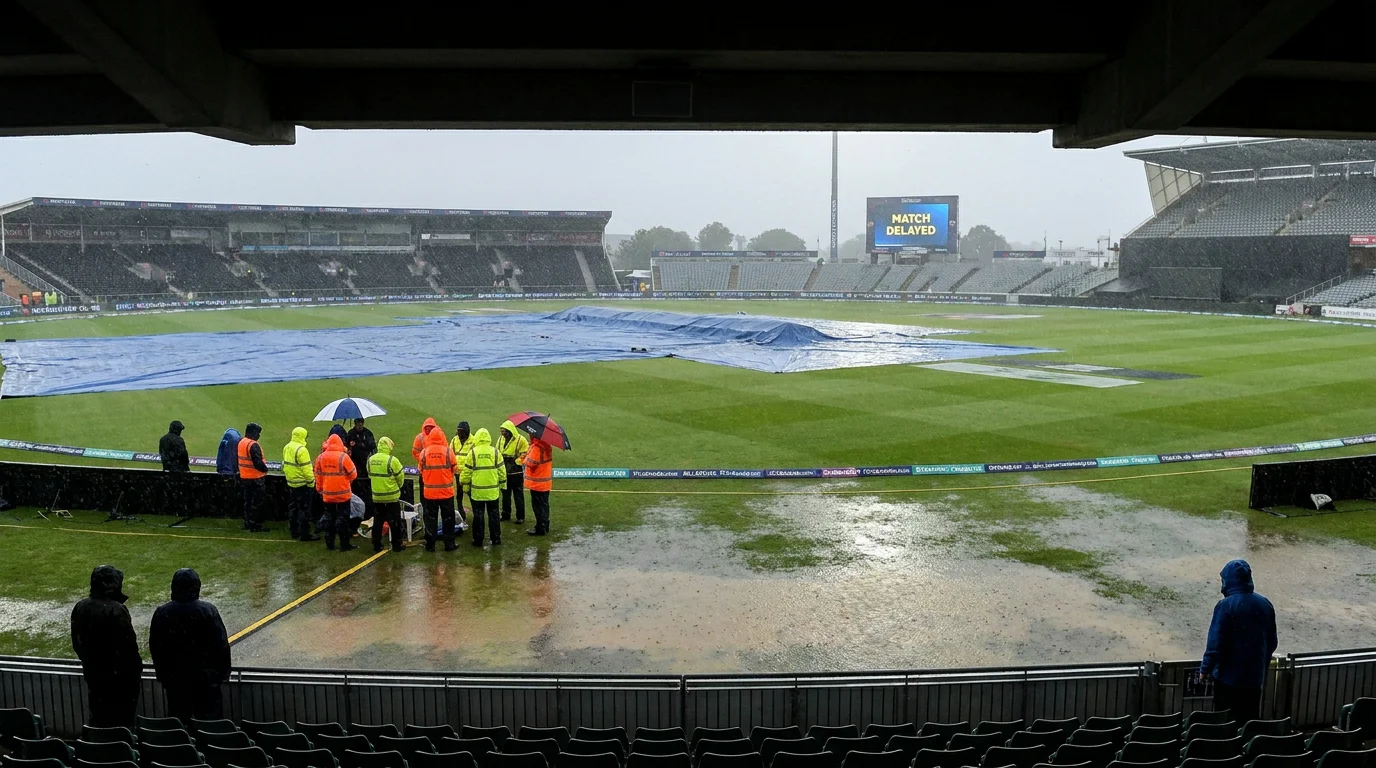
My framework for deciding between three-way and DNB is based on draw probability thresholds. If I estimate the draw probability at 20% or higher — which is common for early-season English Tests, rain-prone venues, and matches between evenly-matched sides — I default to DNB because the insurance is worth the price compression. If I estimate the draw at under 10% — typical for matches in Australia, India, or on result-oriented pitches — the three-way market offers better value because the draw is not a serious threat.
The sweet spot for DNB value is when the weather forecast is marginal. Not a washout (which would make the draw overwhelming and DNB less useful because both sides’ win prices are compressed too far) but a forecast showing rain on one or two of five days. In those conditions, the draw is a genuine contender but not the dominant outcome, and the DNB price still offers a meaningful return.
Settlement Rules and Edge Cases
Standard settlement: if the match produces a winner, your DNB bet is settled normally (win or lose). If the match is drawn, your stake is returned as a void bet. Clean and straightforward.
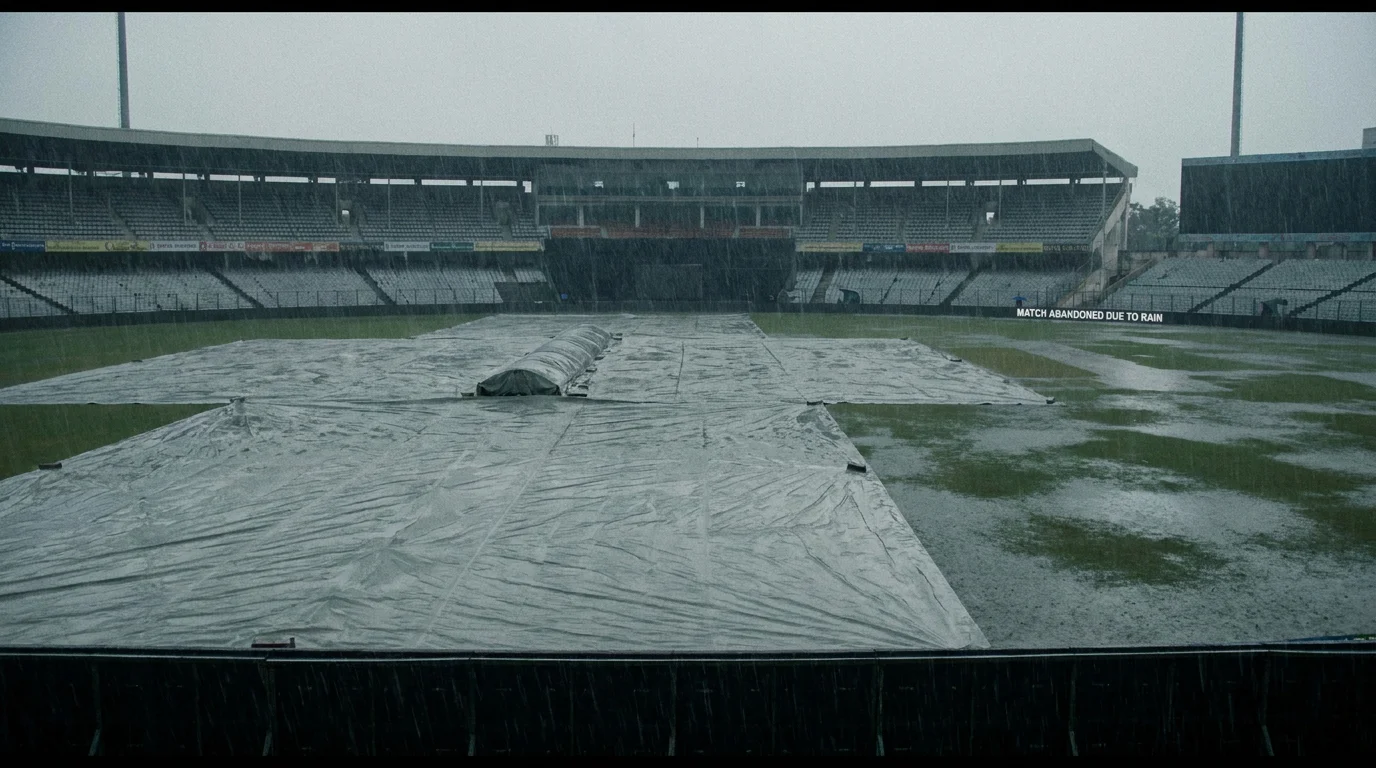
Edge cases arise with match abandonment and reduced matches. If a Test match is abandoned without a ball being bowled, DNB bets are voided on all platforms. If a match starts but is abandoned before a result — say, three days are lost to rain after one day of play — settlement depends on the operator. Most void the bet; a few may settle based on the match state at the time of abandonment if their terms specify this.

In first-class cricket (including the County Championship), matches can end in a draw after the full four days if neither side achieves a result. This is a standard draw and triggers the DNB void. However, some domestic cricket competitions use bonus-point systems that can affect how “wins” and “draws” are defined. Check your operator’s specific terms for domestic cricket DNB markets to ensure you understand which outcomes count as a draw.
One common misconception: a tied Test is not a draw. A tie occurs when both sides are bowled out in their final innings with scores level — this is an extraordinarily rare outcome (only two tied Tests in the history of the game). If a Test is tied, DNB bets are settled based on the operator’s specific rules — some treat a tie as a void (neither side “won”), while others settle it as a dead heat.
DNB vs Match Odds: When to Choose Which
The choice between DNB and standard three-way match odds is a trade-off between protection and price. Use DNB when the draw probability is meaningful and you want to bet on a side to win without taking the draw risk. Use three-way match odds when you believe the draw is unlikely and the price difference between DNB and the three-way win price is substantial enough to justify the additional risk.
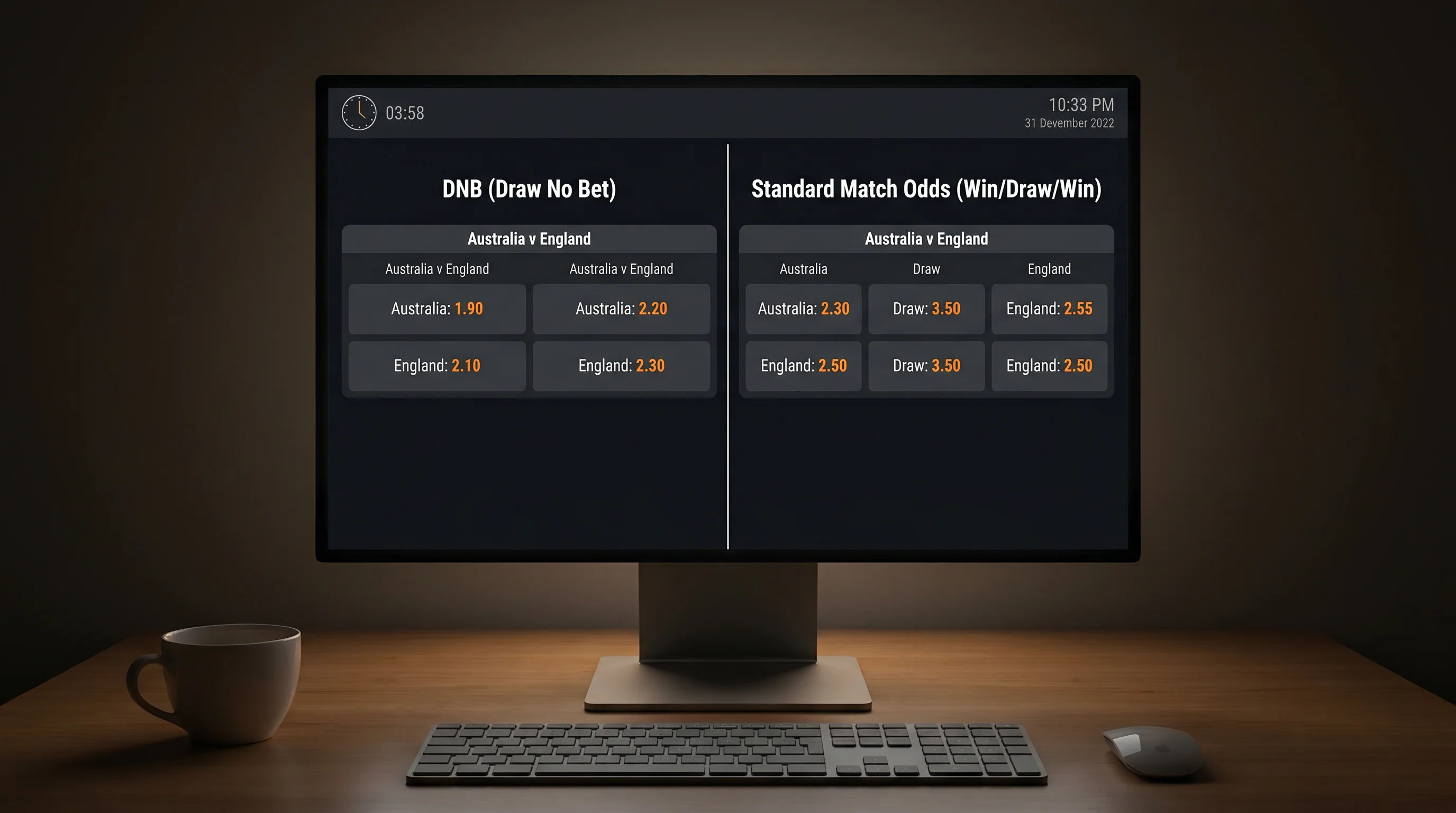
There is a third option that some bettors overlook: backing the draw itself. If you believe the draw probability is significantly underpriced in the three-way market, backing the draw directly offers better expected value than either DNB or a win bet. The draw is the most consistently undervalued outcome in Test cricket because the betting public is psychologically drawn to backing a winner, and bookmakers price accordingly.
My seasonal approach is roughly this: during English cricket summers, when weather and conditions make draws common, I use DNB for Test match win bets and occasionally back the draw as a standalone selection. During overseas tours to Australia, South Africa, or India — where result pitches and better weather make draws less likely — I revert to three-way match odds to capture the full win price. For a closely related market that shapes the outcome of Test matches from ball one, cricket match winner betting covers the broader mechanics of result-based wagering.
Articles
Prepared by the cricketbettingwebsites.com editorial staff.
