


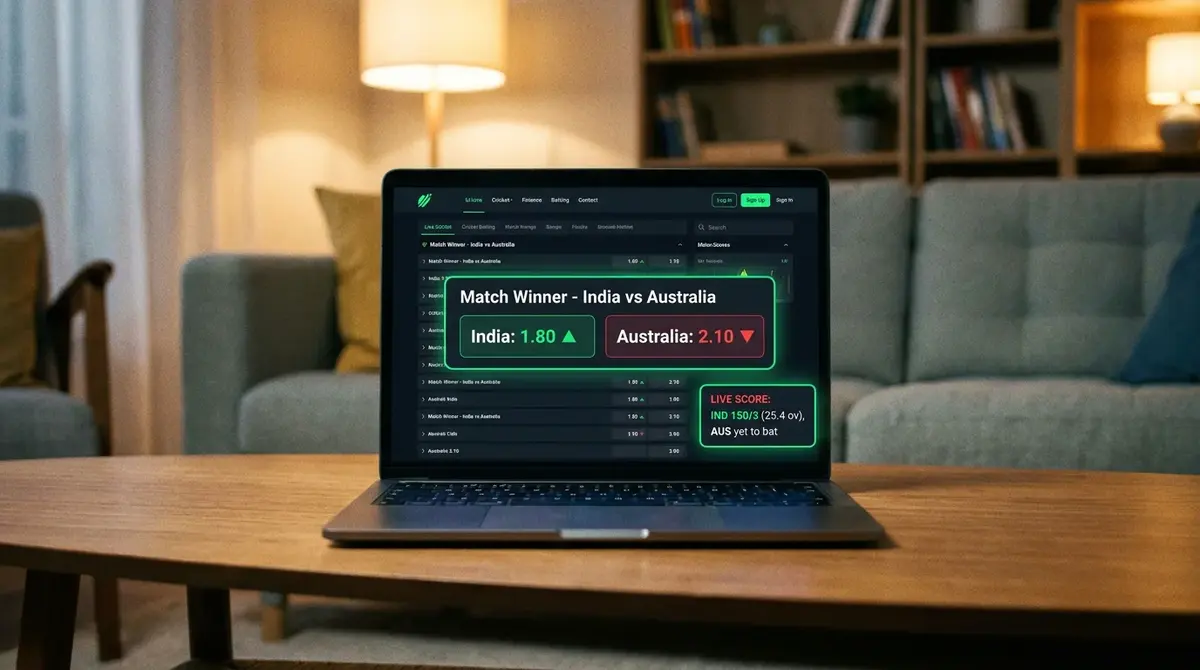
The wicket fell at 14:37. By 14:38, the match winner odds had moved by 15%. By 14:39, the run line for the innings had been recalculated and the top batsman market had reshuffled entirely. I know this because I was watching the numbers shift on my screen in real time during an Ashes Test, finger hovering over the bet slip, waiting for the price I wanted. That one-minute window after a wicket is where most of the value in live cricket betting lives — and where most of the mistakes happen.
Live in-play betting accounts for between 55% and 60% of all cricket wagering in the UK. It is not a niche within a niche; it is the dominant way British punters interact with cricket markets. The sport’s ball-by-ball structure creates a continuous stream of price-moving events that no other team sport can replicate. This guide covers how those live odds work, which moments matter most, and what separates a platform that handles in-play cricket well from one that simply offers it on paper.
How Live Cricket Betting Odds Shift During Play
Every cricket delivery produces a measurable outcome — runs scored, wicket taken, extra conceded, or dot ball. The bookmaker’s pricing algorithm ingests each of these outcomes and adjusts odds across every open market within seconds. A single six in the 18th over of a T20 innings can shift the total runs line, alter the match winner probability, and change the top batsman prices all at once. That interconnectedness is what makes live cricket pricing so dynamic and so different from pre-match markets.
Across all UK online sports betting, live wagers account for roughly 30% of total volume. In cricket, that figure nearly doubles. The reason is structural: a football match offers relatively few discrete scoring events (goals, cards, corners), but a cricket innings contains 120 deliveries in a T20, 300 in an ODI, and potentially 540 per innings in a Test. Each delivery is a pricing event. The algorithm doesn’t wait for a wicket or a boundary to recalculate — even a dot ball shifts the projected run rate, which cascades through every run-related market.
Understanding this cascade is the first step to betting in-play effectively. When a batsman hits a four, the immediate effect is a bump to the total runs projection. But the secondary effect is a change to the required run rate for the chasing side (if it’s the second innings), which alters the match winner odds, which affects the draw price in Test cricket. Experienced live bettors don’t just react to the event — they anticipate the chain of consequences and position themselves before the algorithm finishes updating.
The speed of adjustment varies between bookmakers. Some update odds within one to two seconds of a delivery. Others take four to five seconds, creating a brief window where the displayed price lags the true probability. That lag is where sharp bettors find edges — and where casual bettors can get caught placing bets at stale prices that the bookmaker quickly rejects. If your bet is consistently rejected during live play with a “price has changed” message, the platform is either slow to update or its risk management is tighter than average. Neither is necessarily a dealbreaker, but you should know which situation you are in.
Key In-Play Moments That Move Cricket Odds
Not all deliveries are equal. Some moments in a cricket match create disproportionate odds movement, and knowing which ones to watch for is the difference between a reactive bettor and a strategic one.
Wickets are the most obvious price movers. When a top-order batsman gets out, the match winner odds shift because the batting side’s scoring potential drops. But the magnitude of the shift depends on who got out, when, and what the match situation was. A number three batsman dismissed in the fifth over of a T20 creates a larger swing than the number seven falling in the 18th over because the remaining batting resources are more significantly depleted. I pay closest attention to wickets that fall in clusters — two or three in quick succession — because the algorithm often underreacts to the second and third wickets. The market prices in the first dismissal quickly, but the compounding effect of a collapse takes a few deliveries to fully register.
Powerplay transitions are another key trigger. In T20 and ODI cricket, the end of the fielding powerplay changes the dynamics dramatically. Fielding restrictions are relaxed, run scoring typically dips, and bowling sides gain tactical flexibility. The run rate in overs 7-10 of a T20 is almost always lower than in overs 1-6, and the live odds reflect this. If you are watching a side score at 10 an over during the powerplay and the bookmaker’s total innings line hasn’t adjusted enough for the expected slowdown, there can be value on the under.
Weather interruptions create some of the most mispriced moments in live cricket. When rain stops play, the Duckworth-Lewis-Stern method recalculates targets, and the match winner odds need to adjust to a revised equation that many recreational bettors don’t fully understand. I have seen situations where the DLS-adjusted target actually favoured the chasing side, but the match winner odds still reflected the pre-rain position because the market hadn’t caught up. Those gaps are rare but profitable when they appear.

The new ball in Test cricket is another event to track. When the ball is 80 overs old, the bowling side can take a new one, which typically swings more and bounces more consistently. The period immediately after the new ball is taken often produces wickets, and the session runs market can shift abruptly. Bettors who anticipate the new ball rather than react to it can position themselves in the session runs market before the odds adjust.
In-Play Markets Available on UK Cricket Sites
With approximately 290 million online bets on real-world events placed every month across the UK, in-play markets are not an experimental feature — they are the backbone of modern sports betting. Cricket’s contribution to that volume is driven by the sheer number of markets a single match can generate once play begins.
The core in-play markets that most UK sites offer for cricket include: live match winner (continuously updated odds on which side will win), next over runs (how many runs will be scored in the upcoming over), next wicket method (caught, bowled, LBW, run out, stumped), fall of next wicket (total team score when the next batsman is dismissed), and session runs in Test matches (total runs scored in a given session of play).
Beyond those, the better platforms add ball-by-ball micro-markets: next ball outcome (dot, single, two, three, four, six, wide, no-ball, wicket), runs off the next delivery, and whether the next ball will be a boundary. These settle within seconds and a new market opens immediately, creating a rapid-fire betting cycle that mirrors the pace of the action.
The number of in-play markets available varies significantly between operators and between fixtures. A marquee IPL match might carry 80 or more live markets on the strongest platforms. A County Championship fixture might have 15 to 20. A women’s international ODI falls somewhere in between. The depth of in-play coverage is one of the clearest indicators of how seriously a bookmaker takes cricket. If an operator offers 50+ in-play markets for football’s Premier League but fewer than 20 for an Ashes Test, cricket is not a priority for them, regardless of what their marketing says.
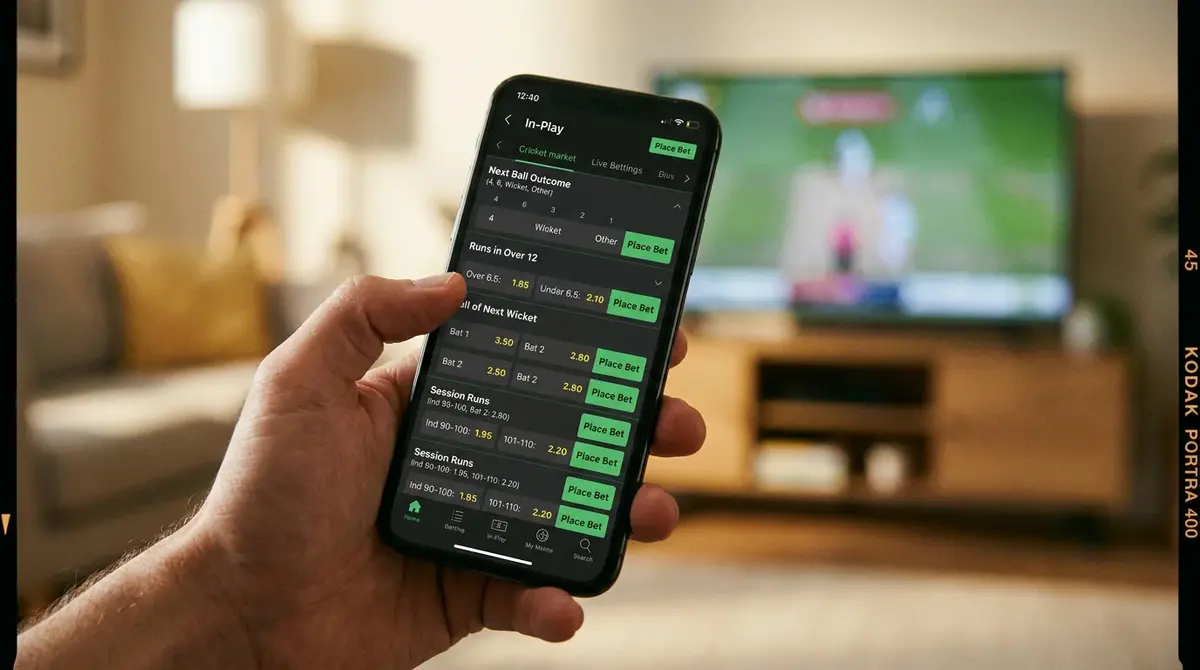
One market category worth highlighting is “innings betting,” which allows you to bet on outcomes within a specific innings rather than the match as a whole. First innings total runs, first innings top batsman, first innings wickets taken by a named bowler — these markets let you isolate your analysis to a defined period and avoid the uncertainty of what happens in subsequent innings. I use innings-specific markets frequently in Test cricket because predicting the outcome of one innings is considerably easier than predicting the result of a five-day match.
Live Betting Across Test, ODI, and T20 Formats
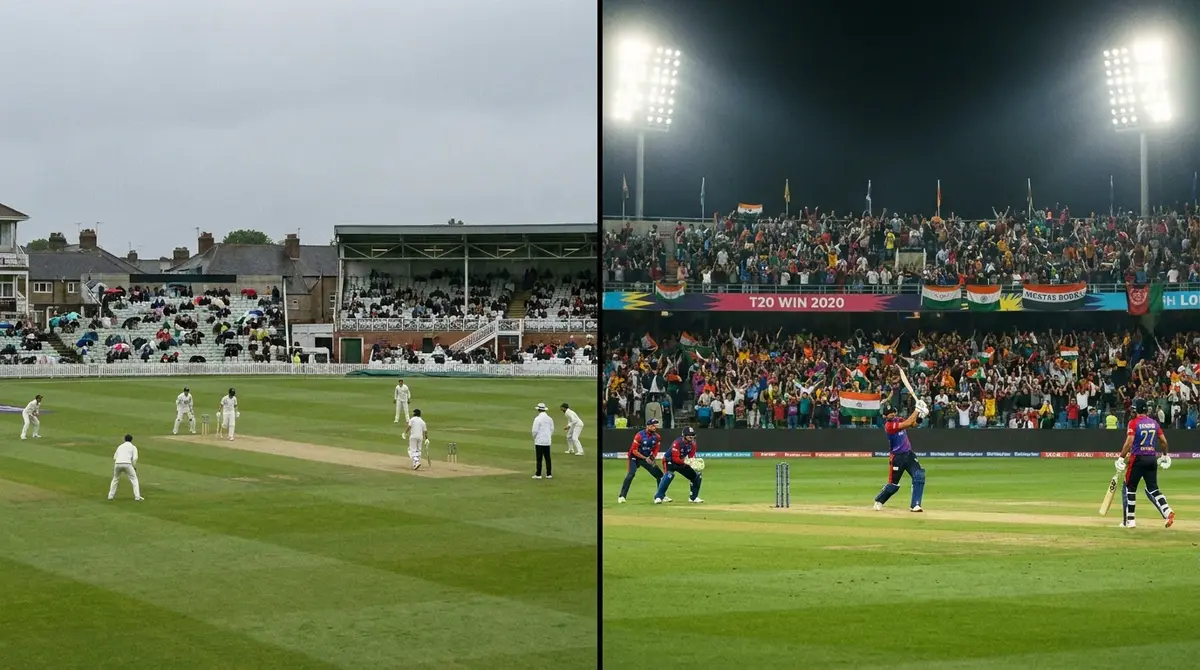
The rhythm of live betting changes completely depending on whether you are watching a Test match unfold over five days or a T20 that is done in three hours. I have distinct strategies for each, and if you try to apply a T20 approach to a Test, you will burn through your bankroll before lunch on day one.
Test cricket live betting is patient. Sessions last two hours each, with breaks between them that give you time to reassess. The morning session of a Test often sets the tone for the entire day: if the bowling side takes three early wickets, the session runs line for the afternoon drops significantly, and the match winner odds shift toward the fielding team. I find the best live value in Tests during the first hour after a meal break, when conditions sometimes change (the ball swings more under lights in the evening session, or the pitch offers more turn as the surface dries after a lunch break). The draw market in Test cricket is a live-betting universe in its own right — it shortens and lengthens throughout the match based on time remaining, weather, and pitch deterioration.
ODI live betting operates in phases. The powerplay (overs 1-10) is high variance, with attacking fields and aggressive batting. The middle overs (11-40) tend to be steadier, and the death overs (41-50) accelerate again. Each phase has different market characteristics. During the powerplay, “runs in the over” markets tend to trade at higher lines. In the middle overs, the lines drop. At the death, they spike again. I track the required run rate during chases as the primary driver of my in-play decisions: when the required rate climbs above 10 an over, the chasing side’s match winner odds lengthen rapidly, and sometimes the market overcorrects.
T20 live betting is pure intensity. The entire match is effectively one long in-play session. Odds shift with every ball, and the windows for placing bets at favourable prices are measured in seconds rather than minutes. The challenge is discipline. The pace of T20 encourages over-trading — placing too many bets, reacting to every boundary, chasing losses after a wicket falls against your position. Setting a hard cap on the number of bets you allow yourself per innings is the most reliable defence. The best T20 live bettors are not the fastest clickers; they are the most selective.
What to Look for in a Live Cricket Betting Platform
Two years ago, I ran a side-by-side test during a live IPL match: the same bet, placed at the same moment, on four different platforms. The spread of outcomes was eye-opening. One platform accepted instantly. Another rejected twice before accepting at adjusted odds. A third suspended the market entirely for eight seconds after the delivery. The fourth accepted but with a noticeably worse price. That experiment crystallised what I look for in a live cricket betting platform.
Market availability during play is the first filter. Some platforms suspend markets for the duration of each delivery — from the moment the bowler starts their run-up until the ball is dead. Others keep markets open throughout, adjusting odds in real time as the ball is bowled. The second approach is more bettor-friendly but requires faster algorithms and greater risk tolerance from the operator. If you are serious about in-play cricket, you want a platform that minimises suspension windows.
The ICC’s Anti-Corruption Unit has noted that the rapid growth of mobile and in-play betting markets has increased exposure to corruption risks, particularly in lower-tier competitions. That observation has practical implications for platform choice: operators that monitor betting patterns for suspicious activity and cooperate with cricket’s integrity bodies are the ones demonstrating genuine commitment to the sport. UKGC-licensed platforms are required to report irregular patterns, which adds a layer of protection that unlicensed offshore sites do not provide.
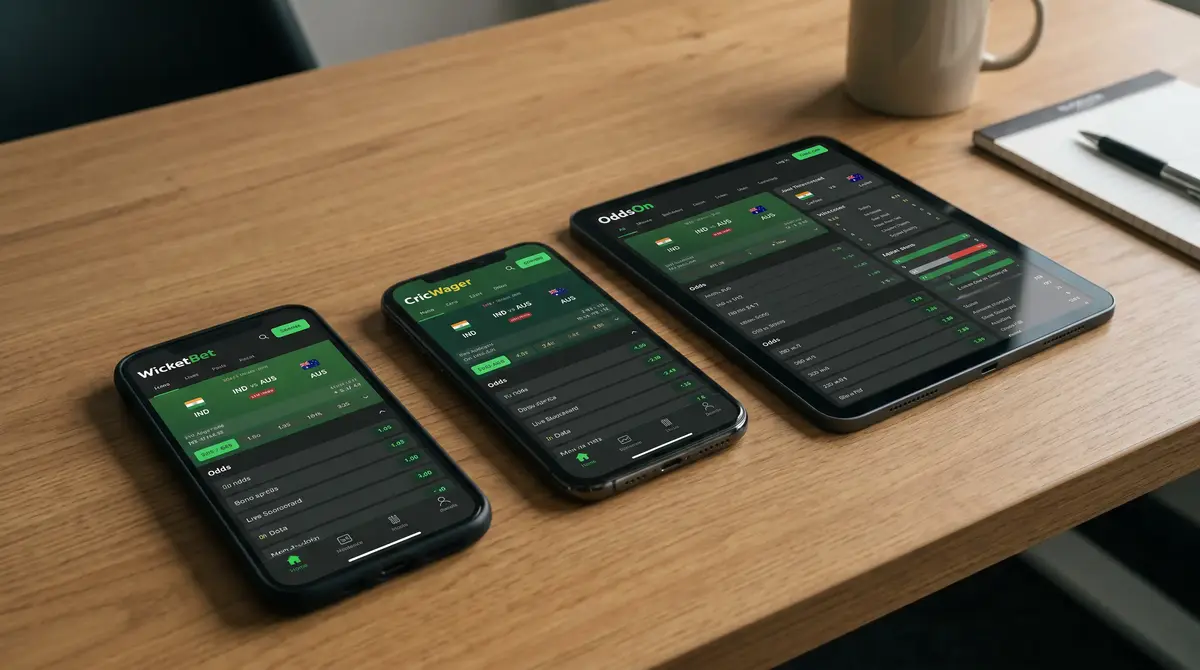
Mobile performance during live matches is non-negotiable. With more than 70% of UK sports bets expected to come through mobile devices in 2026, a platform that handles live cricket smoothly on desktop but stutters on a phone is not meeting the standard. During my testing, I specifically evaluated how each platform handled the transition from pre-match to live markets on mobile — whether the interface updated seamlessly or required a manual refresh. The best platforms push live odds updates to your screen without any action on your part. The worst require you to pull-to-refresh or navigate away and back again to see current prices.
Cash-out availability during live play rounds out the picture. A cash-out button that appears intermittently, disappears during key moments, or displays a price that changes the instant you tap it is a source of frustration for live bettors. The platforms I return to are the ones where cash out functions reliably through pivotal moments — wickets, boundaries, rain delays — rather than suspending when you need it most.
The Role of Live Streaming in In-Play Decisions
Watching a cricket match through a betting app’s embedded stream changed how I approach live wagering. Before streaming integration existed, I was placing in-play bets based on scorecard updates — numbers on a screen with no visual context. I could see that a wicket had fallen, but I couldn’t see whether the pitch was misbehaving, whether the new batsman looked confident or nervous walking to the crease, or whether the ball was swinging. Visual information fills gaps that data alone cannot.
The quality of in-app streams varies considerably. Some platforms offer HD streams with minimal latency — the action on screen is only two to three seconds behind the live broadcast. Others deliver grainy, buffering feeds that run 10 to 15 seconds behind, which makes them useless for reactive betting because the odds have already moved by the time you see the event. A stream that runs more than five seconds behind the bookmaker’s own odds feed creates a paradoxical situation: you are watching something happen on screen while the odds on the bet slip already reflect a reality you haven’t seen yet.
Not every cricket match is available for streaming. Major international fixtures, IPL matches, and high-profile domestic competitions tend to have streaming rights tied to specific platforms. Some UK operators stream overseas T20 leagues that are not available on mainstream British television, which creates a genuine advantage for in-play bettors who want visual context for competitions they can’t watch on Sky Sports or the BBC. If streaming quality matters to your strategy, test the platform’s cricket stream before committing to it as your primary in-play tool. Watch a full session, note the latency, check whether the stream drops during peak moments, and assess whether the picture quality is sufficient to read field placements and pitch behaviour.
Latency, Suspension, and In-Play Risk Management
The first time a platform rejected my in-play bet three times in a row during a crucial over, I nearly threw my phone. Then I realised the rejections were protecting me from a stale price — the odds I was trying to bet had already moved past the point of value. Latency cuts both ways.
Market suspension is the bookmaker’s primary risk management tool during live cricket. When a ball is being bowled, many platforms suspend all markets for between two and five seconds. This prevents bettors from exploiting the gap between a visible on-screen event and the algorithm’s price update. From the operator’s perspective, suspension is essential. From the bettor’s perspective, it means you need to act in the windows between deliveries rather than during the action itself. Plan your bet between balls. When the previous delivery is dead and the bowler is walking back to their mark, you have a 20-to-30-second window before the next suspension. That is when you place your bet.
Bet rejection is the second line of defence. Even when markets are open, the platform may reject a bet if the price has moved between the moment you tapped “place bet” and the moment the server processes the request. Some platforms offer an “accept odds movement” toggle that lets you specify how much price change you are willing to absorb — typically expressed as a percentage or a number of ticks. Setting this too broadly means you might accept a worse price than intended. Setting it too narrowly means constant rejections. I keep mine at one to two ticks for in-play cricket, which balances acceptance rate against price discipline.
Bankroll discipline is the final piece. The speed and excitement of live cricket betting can erode discipline faster than any other betting format. I know bettors who have placed 30 or 40 bets during a single T20 match, most of them impulsive reactions to individual deliveries. Setting a per-session bet limit — both in number of bets and total stake — before the match starts is the most effective safeguard. Mine is five bets per session in Test cricket and three per innings in T20. Anything beyond that, I close the app and watch the match as a fan.

Questions About Live Cricket Betting
Live cricket betting raises specific questions that don’t apply to pre-match wagering. Here are the ones I encounter most.
Articles
Created by the "cricketbettingwebsites.com" editorial team.
