


Roughly 7% of UK sports bettors wager on cricket, and most of them focus on international tournaments and franchise leagues. The County Championship — English cricket’s first-class competition, running from April to September across 18 counties — occupies a quieter corner of the betting market. That quietness is precisely what makes it interesting. Lower liquidity, less analytical coverage from bookmakers, and a schedule that rewards specialists over generalists create opportunities that more visible competitions do not.
I have followed county cricket since long before I started analysing odds professionally, and my knowledge of how Lord’s plays differently from Sophia Gardens, or why a particular bowler’s record at Taunton is exceptional, gives me an edge that I simply do not have when betting on, say, a Bangladesh Premier League match. If you follow county cricket with genuine passion, you already possess the kind of deep, venue-specific, player-specific knowledge that bookmakers struggle to match in their pricing models.
County Championship Coverage on UK Betting Platforms
Not all bookmakers cover the County Championship equally. The major operators — the names you would recognise from any high street or television advert — list match-winner markets for most Division One and Division Two fixtures. But the depth beyond match winner drops off quickly. Player markets, session betting, and total runs are available on some platforms and absent on others, and in-play coverage ranges from comprehensive to nonexistent depending on the fixture and the operator.

I maintain accounts with three operators specifically because their county cricket coverage differs. One offers the best pre-match player markets. Another provides the deepest in-play options. A third consistently prices the draw more generously than its competitors. Spreading activity across platforms is not just a convenience — it is an analytical necessity when you are operating in a market where no single operator dominates coverage.

The quality of county cricket coverage has improved over the past three seasons, partly because streaming access via county club YouTube channels has increased viewership, and partly because the ECB’s efforts to modernise the domestic game have raised its profile. Bookmakers respond to demand, and growing viewership translates into growing betting interest, which justifies deeper market offerings.
Markets Available for County Cricket
The UK cricket betting market generates approximately 52 million pounds annually, and while the County Championship accounts for a modest share of that figure, the markets available are sufficient for serious wagering. Match winner is the core market, offered as a three-way bet (home win, away win, draw) that reflects the first-class format’s genuine possibility of drawn results.
The draw is a much more significant factor in county cricket than in international Tests. Four-day matches on English pitches in April and May, when conditions are often damp and over rates are slower, produce draws at a higher rate than five-day internationals. I track draw frequency by venue and by month across the season, and the data consistently shows that early-season fixtures at grounds like Chester-le-Street and Derby draw more often than mid-summer matches at faster-scoring venues like Taunton and Edgbaston.
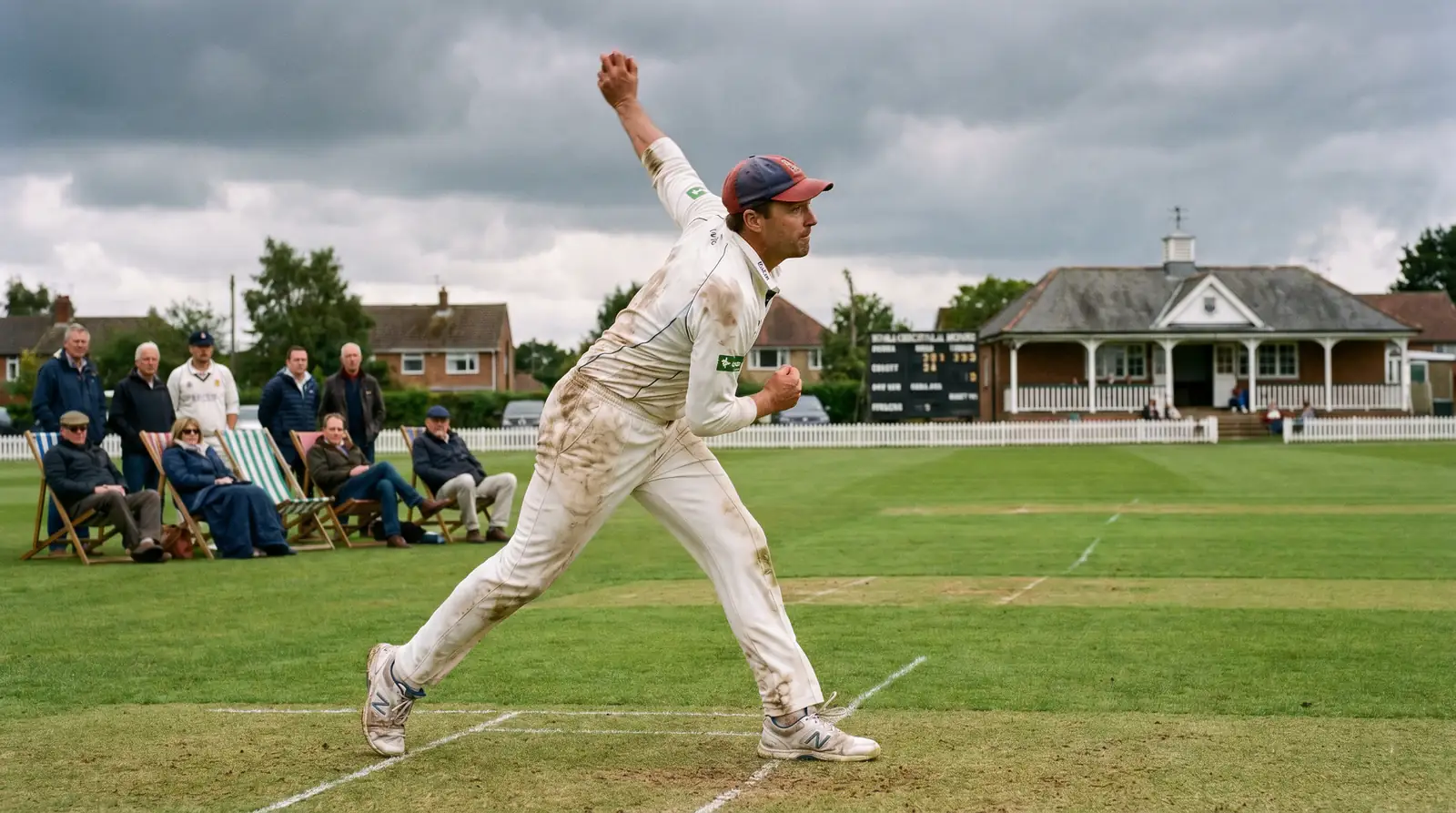
Top batsman and top bowler markets are available for higher-profile county fixtures, particularly Division One matches and any fixture featuring an England international returning to county duty. These markets are where the informational edge for county cricket specialists is strongest. A bookmaker’s algorithm prices England’s star batsman as the top batsman favourite even if that player is returning from a break, has not played red-ball cricket in weeks, and is unfamiliar with the specific pitch. A county regular in strong form, priced at 6/1 or 8/1, often represents better value.
Finding Value in Low-Profile County Matches
The value in county cricket betting comes from information asymmetry. Bookmakers allocate analytical resources roughly in proportion to betting volume, and county cricket generates less volume than international fixtures. That means the pricing is based on broader inputs — team standings, recent results, squad names — rather than the granular factors that determine outcomes: which groundsman prepared the pitch, how much grass was left on, whether the forecast changed overnight, whether a key bowler has a minor niggle that limits his pace.

County cricket clubs publish pitch reports and team news on their websites, and beat journalists for regional newspapers often break selection news before the bookmaker adjusts their odds. Following three or four county clubs closely on social media gives you a real-time information flow that bookmakers’ centralised trading desks struggle to match. When a county announces a spin-friendly pitch for a match against a side with no specialist spinner, the odds may not reflect that mismatch for hours.

Division Two matches carry the widest margins and the least analytical attention from bookmakers. If you know that a Division Two side has won four consecutive home matches because their pitch suits their bowling attack, and the bookmaker is pricing the next home match based on their overall season record, you are seeing something the odds do not yet show. That kind of edge is small, incremental, and consistently available across a season of 14 rounds.
County T20 Blast vs Championship: Betting Differences
The T20 Blast runs alongside parts of the Championship season, and the two competitions could not be more different from a betting perspective. Championship matches are four-day affairs with three possible outcomes and slow-burning narratives. T20 Blast matches are three-hour sprints with binary outcomes and volatile odds.

For betting purposes, the key difference is liquidity. T20 Blast matches attract significantly more betting volume because the format is faster, more popular with casual bettors, and more widely covered by bookmakers. That higher volume means tighter margins and more efficient pricing. The edge available in T20 Blast is narrower than in Championship cricket, but the volume allows larger stakes and faster turnover.
I treat the two competitions as entirely separate betting disciplines. My Championship approach is patient, venue-focused, and built on draw probability and pitch analysis. My T20 Blast approach is form-focused, favouring sides with in-form top-order batsmen and death-bowling depth. The skills transfer, but the strategies do not. If you are approaching county cricket betting for the first time, choosing one format and building expertise in it is more productive than splitting attention across both. For an exploration of how five-day cricket’s unique dynamics translate into specific strategies, the Test match betting guide covers the format in depth.
Articles
Created by the "cricketbettingwebsites.com" editorial team.
