

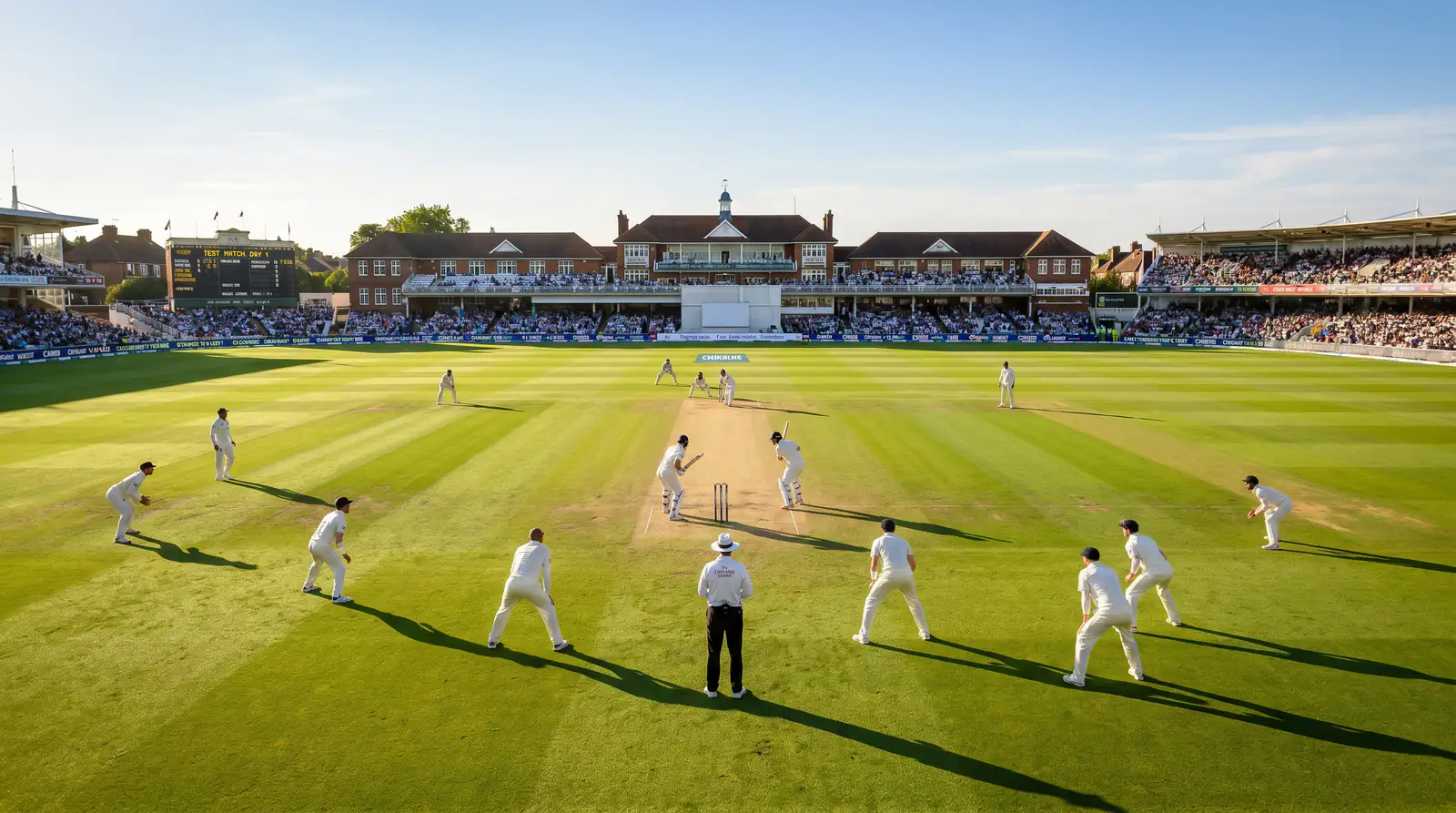
Live in-play cricket betting accounts for between 55 and 60% of all cricket wagers placed in the UK, and nowhere is that figure more consequential than in Test cricket. Five days of play create a narrative arc that no other sport replicates — a match can shift from dominance to doubt to resolution across sessions that each carry their own logic. Betting on Test matches is not faster or more exciting than T20 wagering. It is deeper, more analytical, and rewards patience in a way that short formats cannot.
I have a confession: I find Test match betting more intellectually satisfying than any other form of cricket wagering. The variables are richer — pitch deterioration, weather systems, declaration strategy, fatigue — and the odds move in ways that reflect genuine uncertainty rather than the binary swings of T20. If you have ever watched odds shift across a five-day match, you have seen the market telling a story, and reading that story is the core skill of Test match betting.
Pitch Reports and Weather: The Test Bettor’s Edge
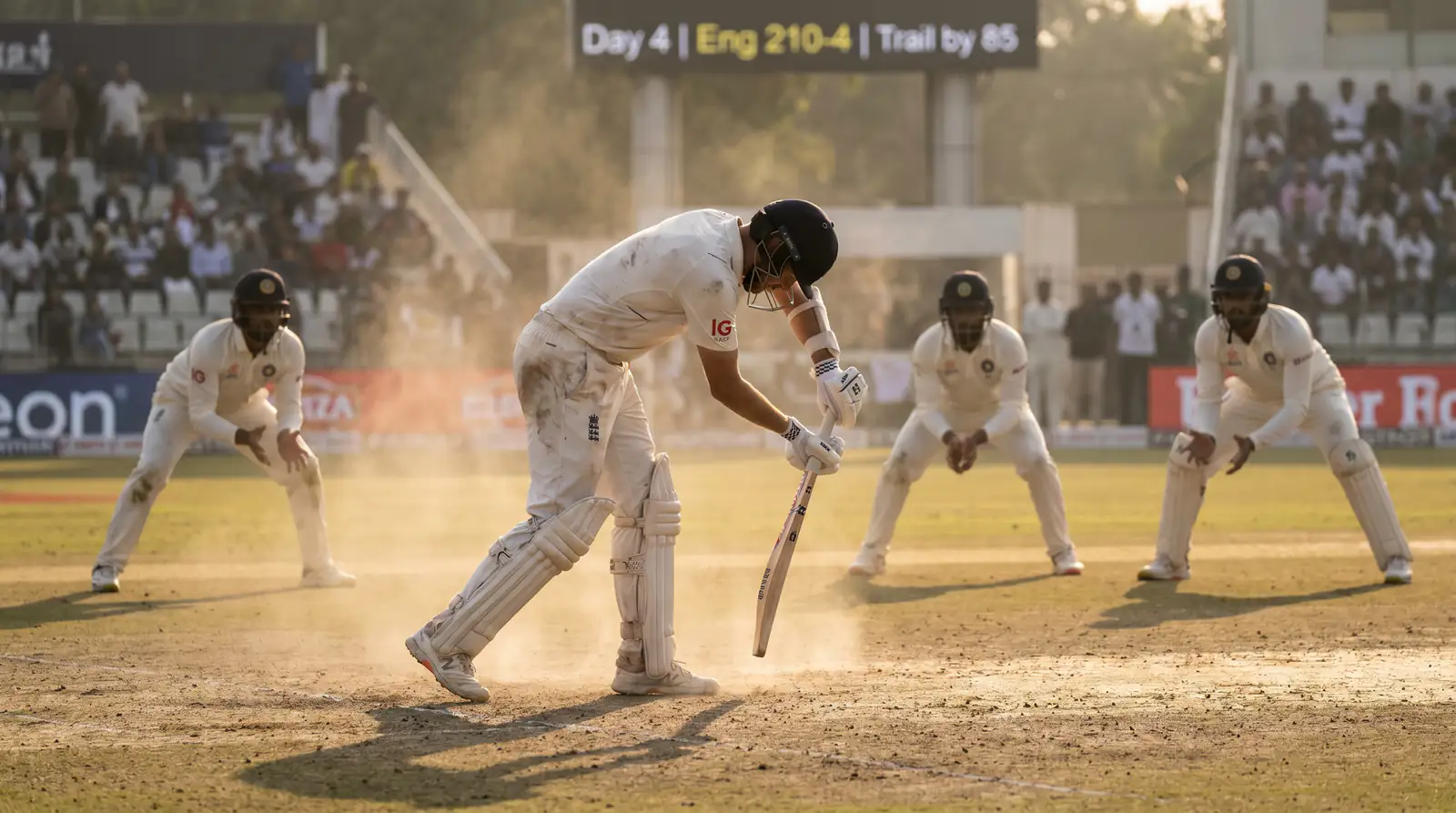
Before I look at team news or head-to-head records, I look at the pitch and the forecast. In Test cricket, the playing surface evolves over five days in ways that directly shape which outcomes are possible. A green-tinged pitch on day one favours seam bowling and may produce first-innings collapses — that suppresses totals and tilts the match toward whichever side bats second on a flatter surface after the grass wears off. A dry, cracked surface on day four or five favours spin, and if one side has a quality spinner, the match-winner market should reflect that advantage. Often, it does not fully.

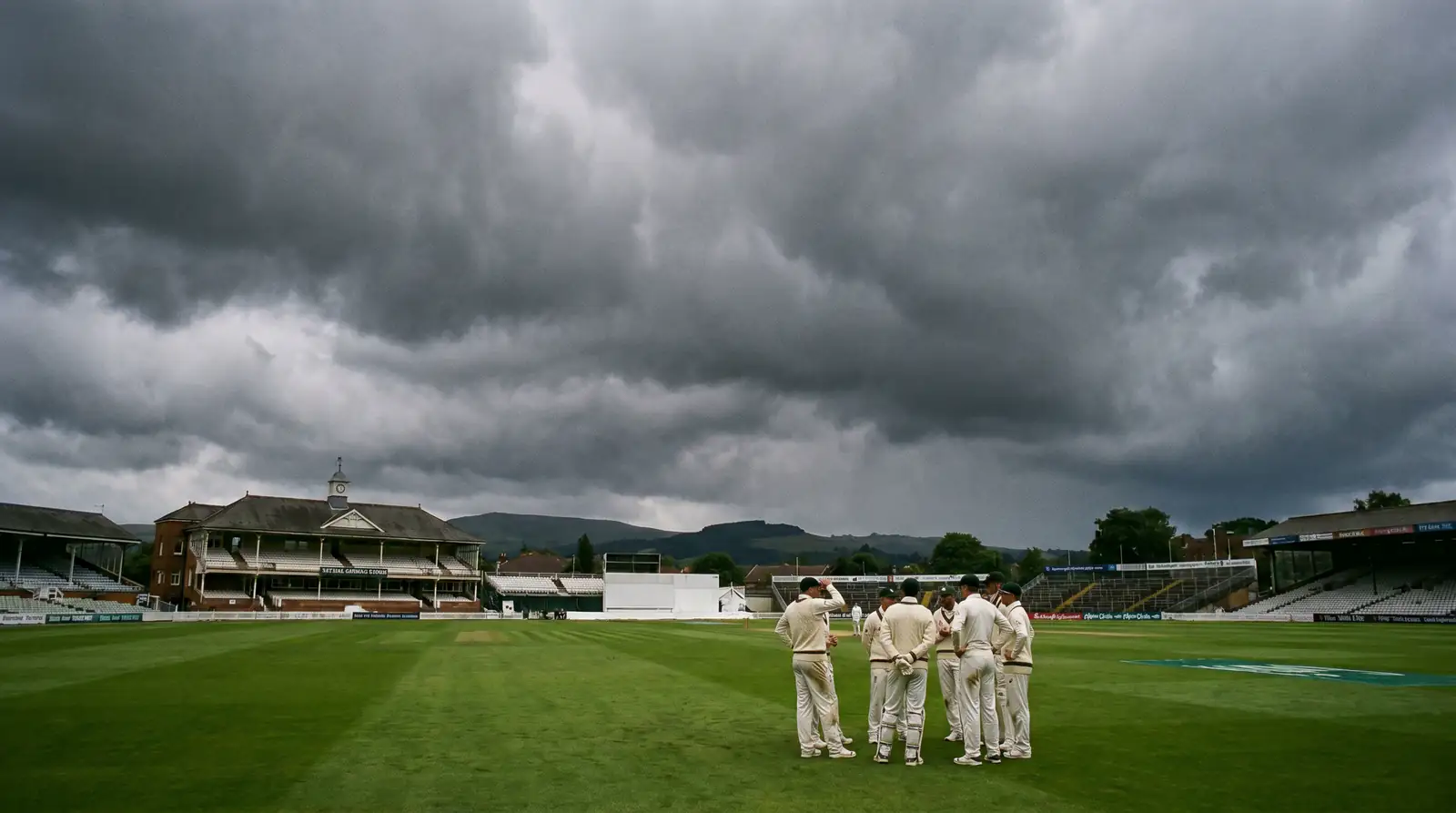
Weather is the second pillar. Rain does not just delay play — it can change pitch behaviour, reset momentum, and make the draw more likely. A forecast showing rain on two of five days fundamentally alters the probability distribution of outcomes. The draw becomes more probable, and the match winner prices for both sides should lengthen. I track Met Office forecasts for UK Test venues and Bureau of Meteorology data for Australian Tests, and I have found that the market underprices weather disruption more often than it overprices it.
The combination of pitch and weather creates what I call the “conditions thesis” — a directional view on how the match will unfold based on physical factors rather than team quality alone. If my conditions thesis differs from the market’s implied probability, I have a potential edge. If it aligns, I move on and wait for a match where conditions create genuine disagreement.
When and Why the Draw Holds Value
Live betting makes up roughly 30% of all online sports wagers in the UK, and the draw in Test cricket is one of the markets where live betting offers the clearest value. At the start of a Test match, the draw is typically priced at longer odds than either side winning. By day three or four, if the match is evenly poised and time is running out, the draw price contracts sharply. Buying the draw early in matches where I expect weather disruption or slow over rates has been one of my most consistent positive-expectation strategies over the past nine years.
The draw is also undervalued in matches between teams of similar quality at venues where pitches historically flatten out. If the first-innings totals exceed 350 each and the match enters day four without either side establishing a decisive lead, the draw becomes a strong probability. The market knows this in theory, but it tends to price the draw generously before the match begins because punters gravitate toward win outcomes. That bias is the edge.
Where the draw does not hold value: matches at venues with historically result-oriented pitches (Galle for spin, Christchurch for seam), or matches where one side is significantly stronger. In those cases, the draw price is appropriately long, and backing it is speculative rather than analytical.
Session and Day-by-Day Betting
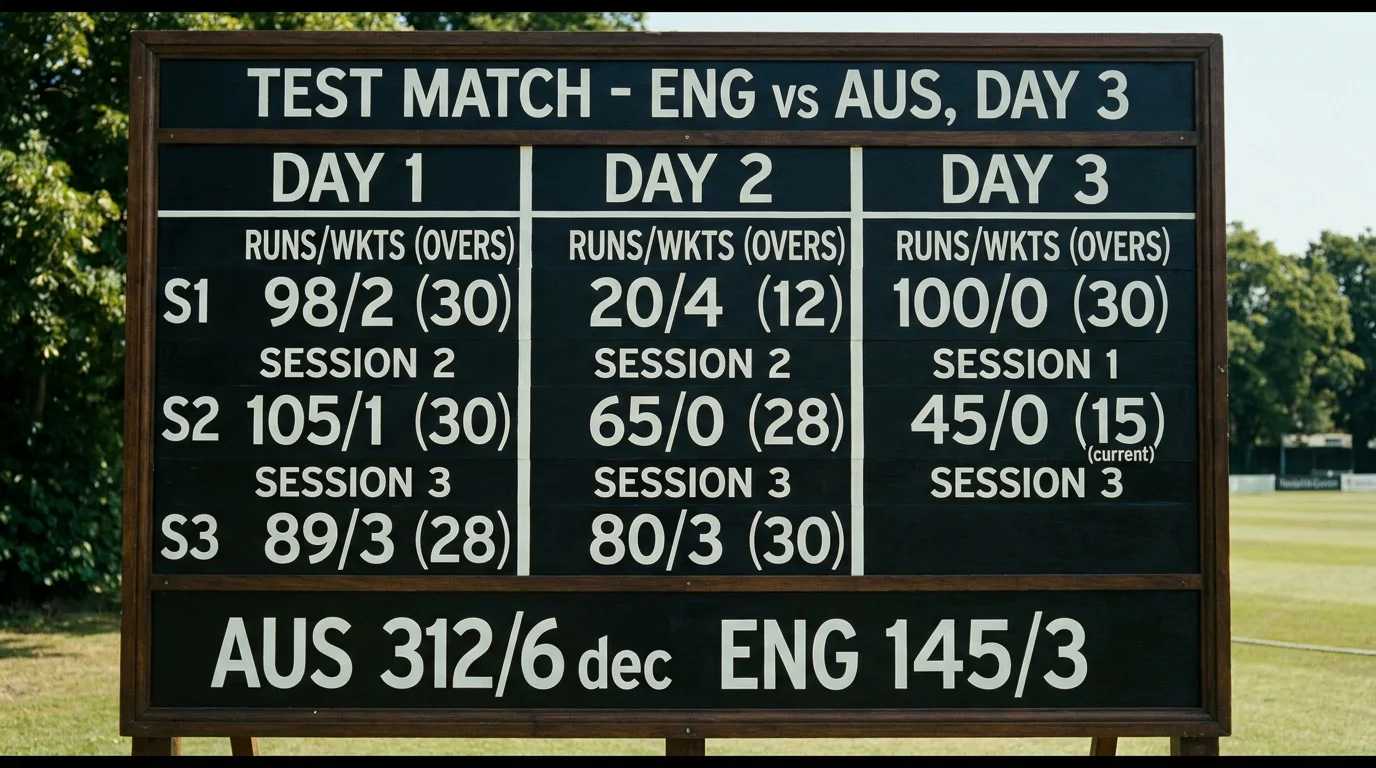
Session betting is Test cricket’s unique contribution to the wagering landscape. Each day is divided into three sessions (morning, afternoon, evening) of roughly two hours each, and you can bet on the number of runs scored or wickets taken in each session. This granularity lets you exploit short-term conditions that do not affect the match outcome but create session-level predictability.
Morning sessions under overcast skies at grounds like Trent Bridge or Headingley consistently produce more wickets than afternoon sessions when the cloud cover lifts. That pattern is not a secret, but the session-market pricing does not always reflect it efficiently. If the forecast shows cloud cover clearing after lunch, “over” wickets in the morning session and “over” runs in the afternoon session is a thesis that I have found profitable enough to revisit across multiple English summers.
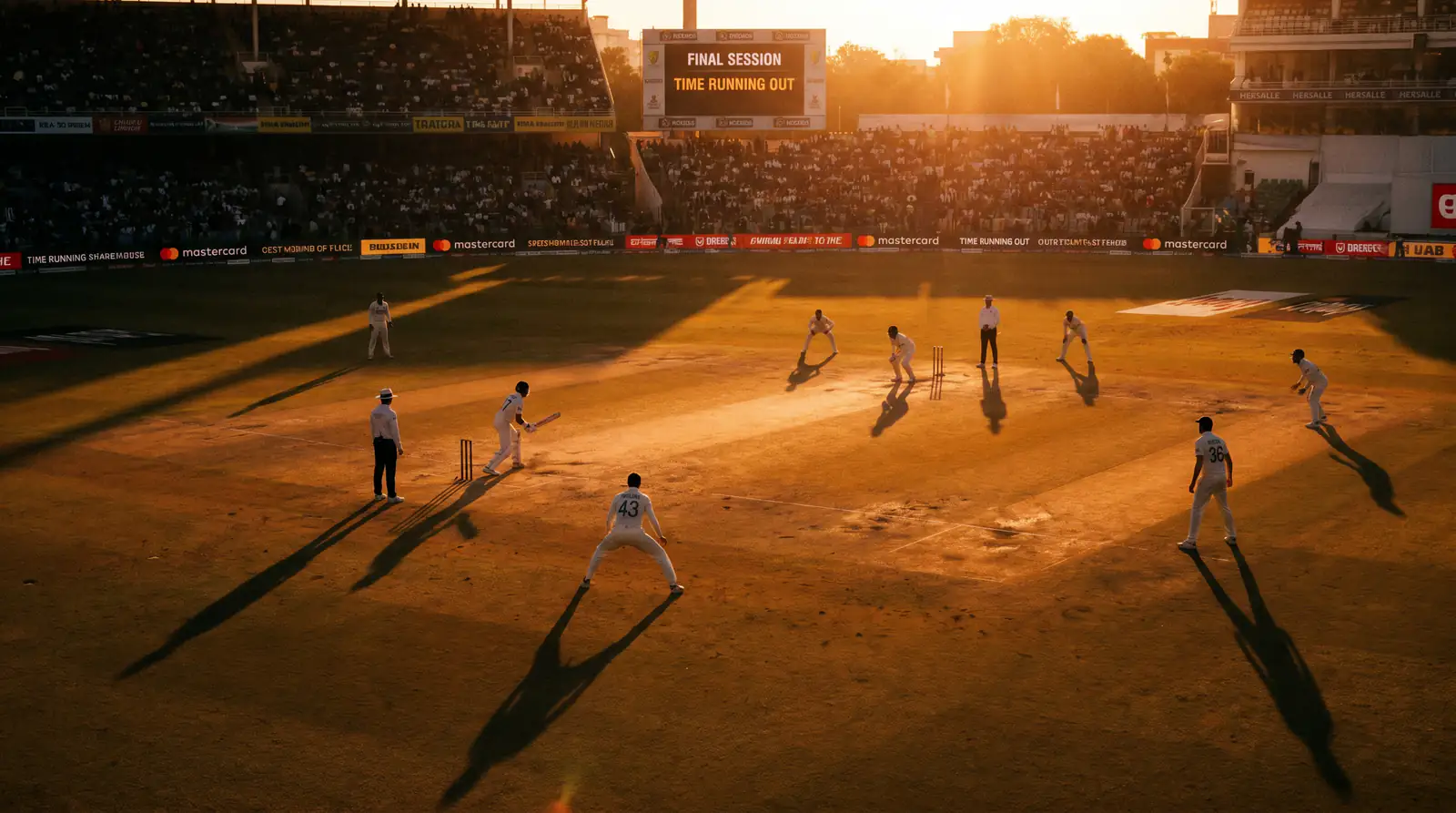
Day betting — backing the outcome of a single day of play (which side leads at stumps, how many runs are scored) — is another layer. Day one of a Test is more predictable than day five because the pitch is at its most consistent, the batting order is intact, and weather disruptions have not yet complicated the calculation. I concentrate my day-betting activity on days one and two, where the conditions thesis holds most reliably.
Day Five Scenarios and Late-Match Opportunity
The ICC’s Anti-Corruption Unit has noted that mobile and in-play betting growth has increased exposure to integrity risks in cricket. That observation carries particular weight on day five of a Test match, where the outcomes narrow, the stakes intensify, and the odds move dramatically with each passage of play. For bettors, day five is where discipline matters most.

Day five of a competitive Test offers the sharpest in-play edges because the range of possible outcomes is narrowest. If Side A needs 150 to win with 8 wickets in hand, the market is pricing a chase, and every wicket changes the probability significantly. A batting collapse from 100-2 to 130-6 can shift the match-winner odds by several multiples within half an hour. Bettors who are watching live and can assess the situation — is the pitch deteriorating? Is the new batsman a tailender? Is reverse swing in play? — have a genuine informational advantage over the algorithm-driven odds that respond primarily to score and wickets.
The temptation on day five is to bet reactively — to chase the odds as they swing. Resist it. My approach is to enter day five with a pre-formed view on the most likely outcome based on the match situation at stumps on day four, and then bet only if the morning’s play moves the odds to a level that exceeds my pre-match assessment of probability. If the odds and my assessment align, I stay out. If they diverge, I act. That framework prevents the kind of impulsive live betting that turns a well-analysed position into a series of emotional trades. For a focused guide to the draw no bet market in cricket, including when DNB makes sense as a risk-reduction strategy in Tests, that article breaks down the mechanics and settlement rules.
Articles
Prepared by the cricketbettingwebsites.com editorial staff.
