


Live in-play cricket betting accounts for between 55 and 60% of all cricket wagers placed by UK bettors. Within that live segment, ball-by-ball betting represents the sharpest edge of the market — micro-bets settled in seconds, with new markets opening after every single delivery. It is the fastest form of cricket wagering, and it demands a completely different mindset from pre-match or even standard in-play betting.
I placed my first ball-by-ball bet during a T20 Blast match in 2021, and I lost three consecutive bets in under two minutes. The speed was the problem. I was processing the previous delivery while the next one was already being bowled, and by the time I made a decision, the market had moved. Ball-by-ball betting is not a casual addition to your cricket wagering — it is a discipline that requires preparation, speed, and a clear understanding of when to step away.
How Ball by Ball Betting Markets Operate
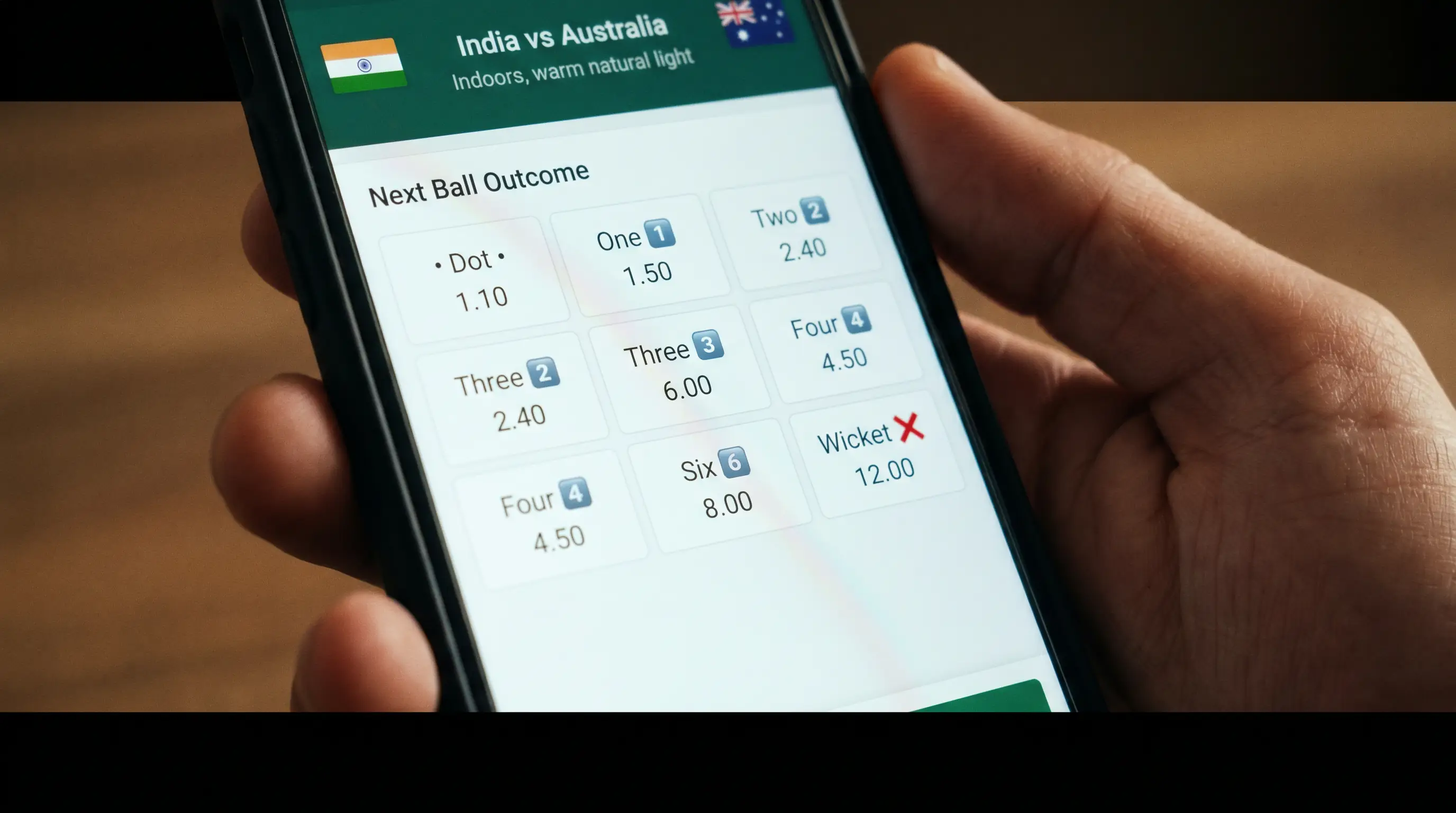
The mechanics are simple in principle and intense in practice. Before each delivery, the bookmaker opens a set of markets: what will the outcome of the next ball be? The options typically include dot ball, one run, two runs, three runs, four (boundary), six, wicket, wide, and no-ball. Each outcome carries its own odds, and you have a window of a few seconds to place your bet before the bowler begins their run-up.
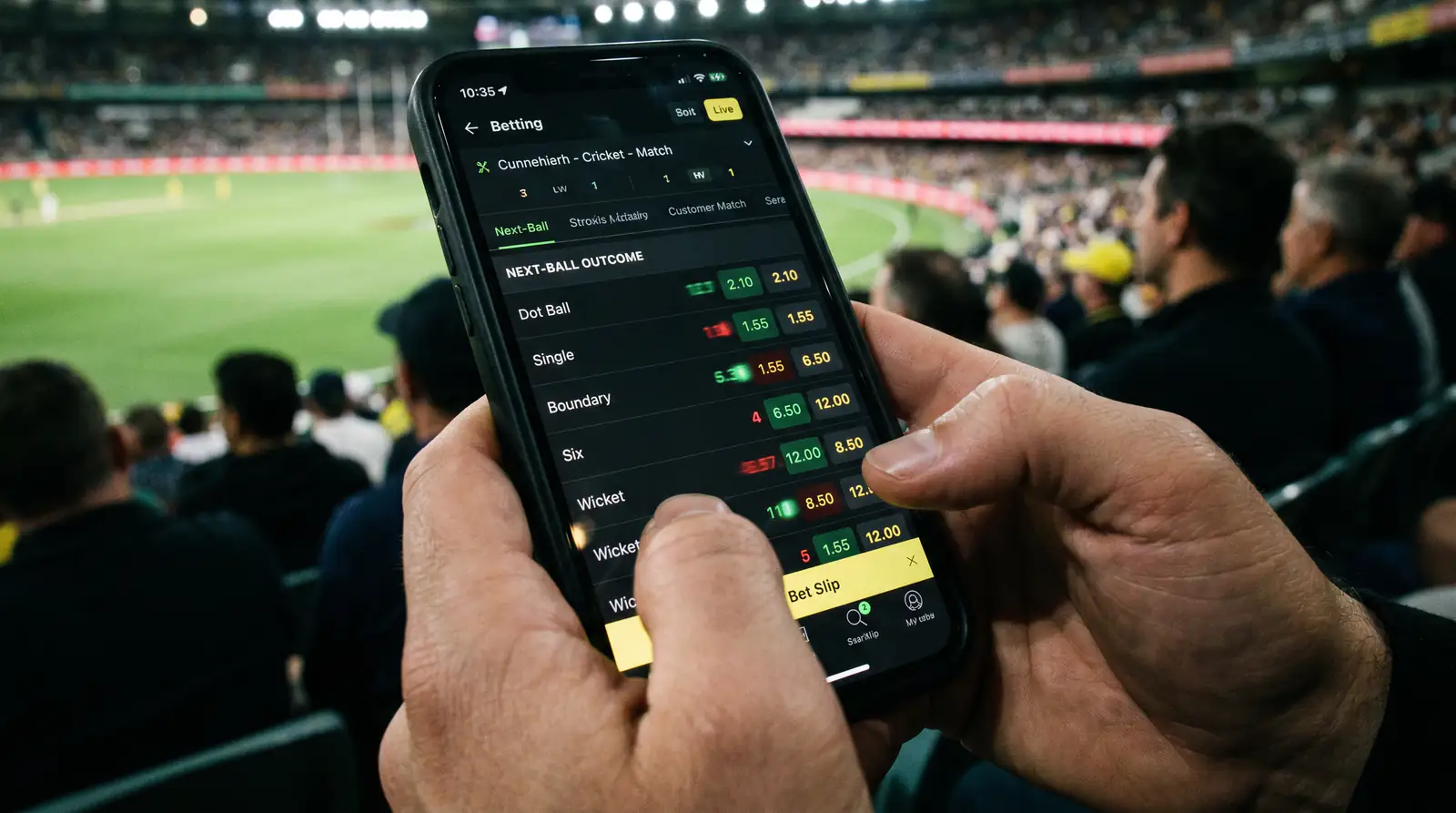
Once the delivery is bowled and the outcome is determined, the market settles immediately. Your bet wins or loses, the next delivery’s markets open, and the cycle repeats. In a T20 match, this means up to 240 individual betting events across two innings (120 legal deliveries per side, though extras add more). In a Test match, the number of betting events across a full day’s play can exceed 500.
The odds on each outcome are driven by the match situation. A dot ball is heavily favoured when a specialist death bowler is bowling to a lower-order batsman — the price might be 4/7 or shorter. A boundary is more likely when a set batsman is facing a part-time spinner on a flat pitch, and the odds will reflect that. The bookmaker’s pricing model updates constantly based on the bowler, batsman, phase of play, pitch behaviour, and match state.

What makes ball-by-ball betting analytically interesting is that the odds reset with every delivery. Unlike match-winner or over/under markets, where your position compounds over the course of the match, each ball-by-ball bet is an independent event. That independence means you can enter and exit the market freely without carrying risk from one delivery to the next — but it also means there is no compounding benefit from being right multiple times in succession.
Next Ball Outcome Markets
The core market is the next ball outcome, but several operators expand this into related micro-markets. Runs off the next ball (grouped: 0, 1-2, 3+, boundary) simplifies the outcome into fewer categories and produces slightly more predictable pricing. Wicket on the next ball is a standalone market with high odds — typically 10/1 to 20/1 depending on the match situation — that attracts punters looking for occasional large payouts.
Some operators offer “runs in the next over” as a slightly slower-paced alternative to true ball-by-ball betting. This market gives you six deliveries of exposure rather than one, which introduces more variance but also more time to form a view. I find the “runs in the next over” market more analytically approachable than individual delivery outcomes, because the six-ball sample is large enough to apply statistical reasoning about the bowler’s economy rate and the batsman’s strike rate.
“Method of next dismissal” is another micro-market that appears during ball-by-ball play. Caught, bowled, LBW, run out, stumped — each carries different odds based on the bowler type, batsman technique, and field placement. Caught is almost always the shortest-priced option because it accounts for roughly 60% of all dismissals in professional cricket, but the price varies based on whether the bowler is a seamer (more caught behind and in the slips) or a spinner (more caught in the deep).
Availability of Ball by Ball Markets on UK Sites
Over 70% of all UK bets are expected to be placed through mobile devices in 2026, and ball-by-ball markets are inherently mobile-first. The format rewards quick decisions and single-tap bet placement, which suits the mobile interface. However, not all UK bookmakers offer ball-by-ball markets, and among those that do, the depth and reliability vary significantly.

The best operators offer ball-by-ball markets for international cricket (Tests, ODIs, T20Is), the IPL, The Hundred, and the T20 Blast. Markets open promptly between deliveries, odds update in real time, and settlement is instantaneous. The weaker operators offer ball-by-ball only for high-profile internationals, experience frequent market suspensions between deliveries, and occasionally delay settlement.
Coverage quality drops sharply below the top tier. County Championship matches rarely attract ball-by-ball markets, and associate-member internationals are seldom covered at this level. If ball-by-ball betting is a significant part of your strategy, verify that your chosen operator covers the competitions you care about before committing. A bookmaker that lists ball-by-ball for IPL but not for T20 Blast will leave gaps in your schedule.
Speed, Discipline, and Risk Management
The biggest risk in ball-by-ball betting is not any individual losing bet — it is the cumulative effect of betting too frequently without an edge. Each delivery presents a new market, and the temptation to bet on every ball is strong. The maths, however, is unforgiving: if the bookmaker’s margin is 5% on each delivery market, betting on every ball across a T20 match means you are paying approximately 12 pounds in margin per 100 pounds wagered across the match. That margin erodes your bankroll faster than any other form of cricket betting.

My approach is selective. I bet on deliveries where I have a specific view that disagrees with the market price — a bowler who I believe is more likely to bowl a wide than the odds suggest, or a batsman who I believe is due for a boundary based on the match situation and field placement. On most deliveries, I watch and do not bet. That selectivity is the difference between ball-by-ball betting as a strategy and ball-by-ball betting as entertainment.
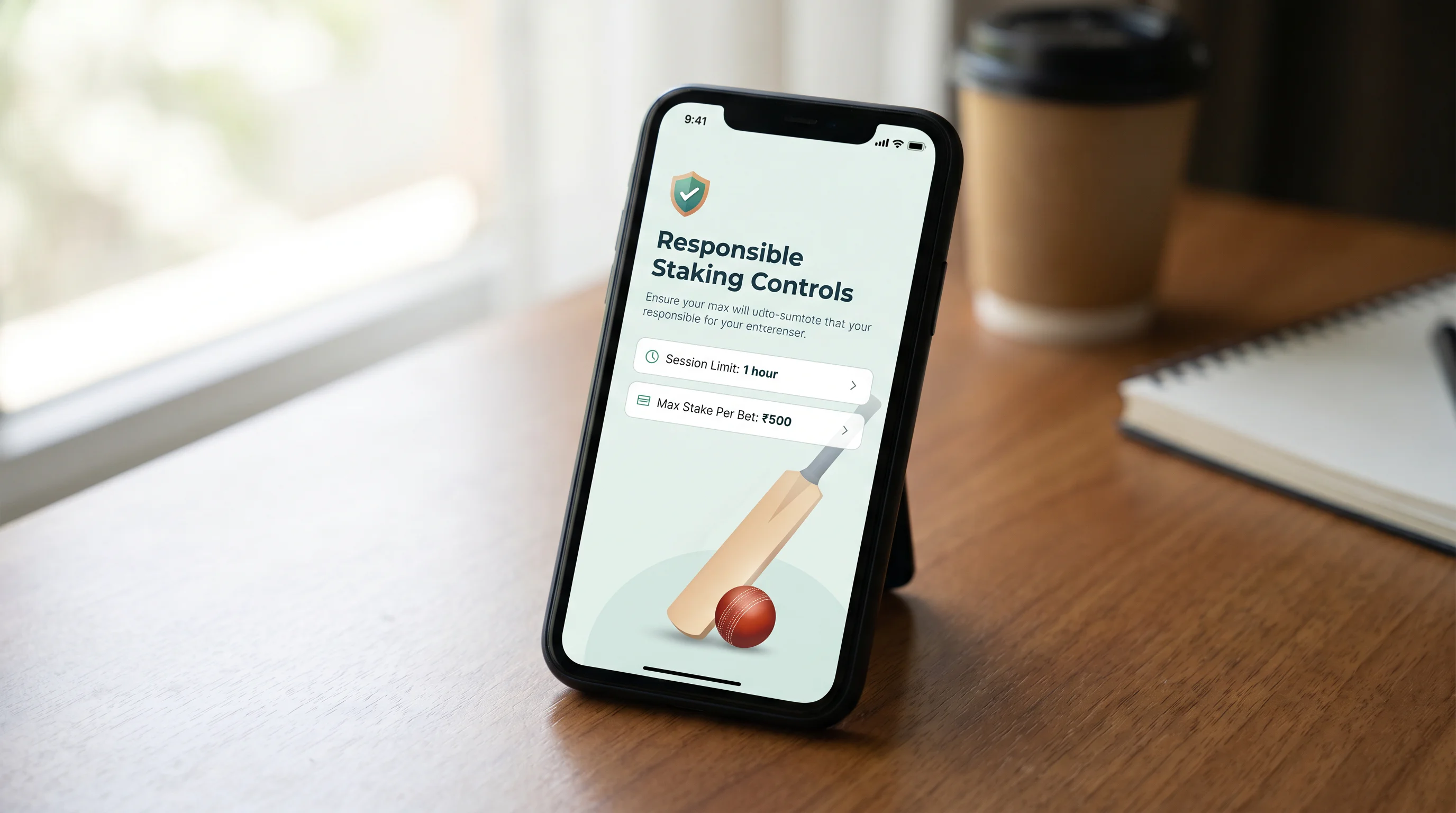
Session limits are essential. I set a maximum number of ball-by-ball bets per match before the match starts, and I stick to it regardless of results. If I hit my limit in the first innings, I stop. The continuous nature of ball-by-ball markets makes it easy to escalate — one more delivery, one more bet — and that escalation is where losses compound. Treat your per-match allocation as a hard constraint, not a guideline. For a broader view of how live wagering works across all cricket markets, live in-play cricket betting covers the full landscape.
Articles
Created by the "cricketbettingwebsites.com" editorial team.
