

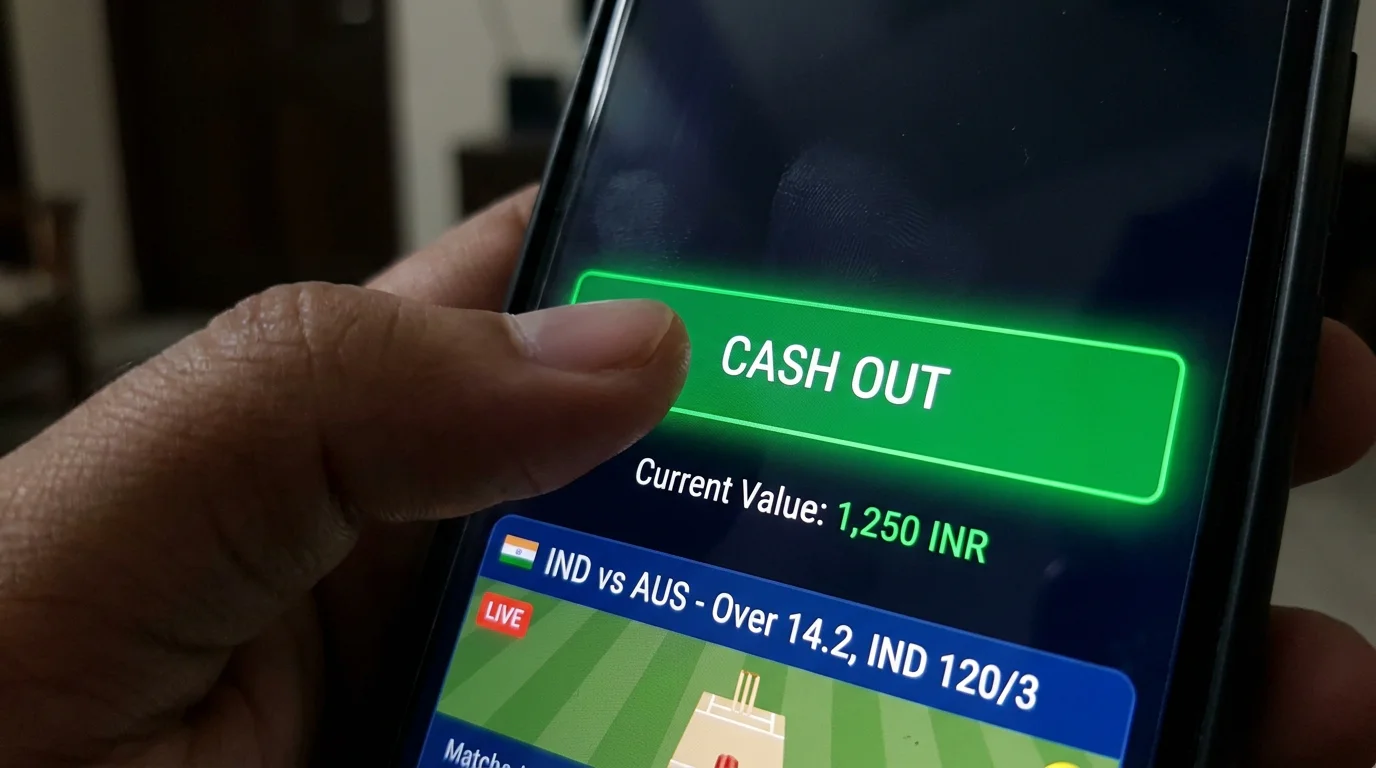
Live betting accounts for approximately 30% of all online sports wagers in the UK, and cash out is the feature that makes live betting feel like trading rather than gambling. Three overs into the second innings of a T20, your pre-match bet is sitting at a 60% profit. The batting side just lost their opener, and momentum is shifting. Do you lock in the profit now, or ride it out? That decision — made in real time, with money on the line — is what cash out is built for.
I did not use cash out for my first two years of cricket betting. I placed bets and let them settle, treating each wager as a fixed commitment. It took a particularly painful experience — a Test match bet that was 85% of the way to paying out before a rain delay wiped out the final session and the match ended in a draw — to convince me that cash out is not a gimmick. It is a risk management tool, and using it well requires the same analytical discipline as placing the bet in the first place.
How Cash Out Works for Cricket Bets
Cash out allows you to settle a bet before the event is complete. The bookmaker offers you a price to close your position based on the current state of the match and the live odds. If your bet is winning, the cash out offer represents a guaranteed profit that is less than your potential full payout. If your bet is losing, the cash out offer represents a guaranteed loss that is less than your full stake.
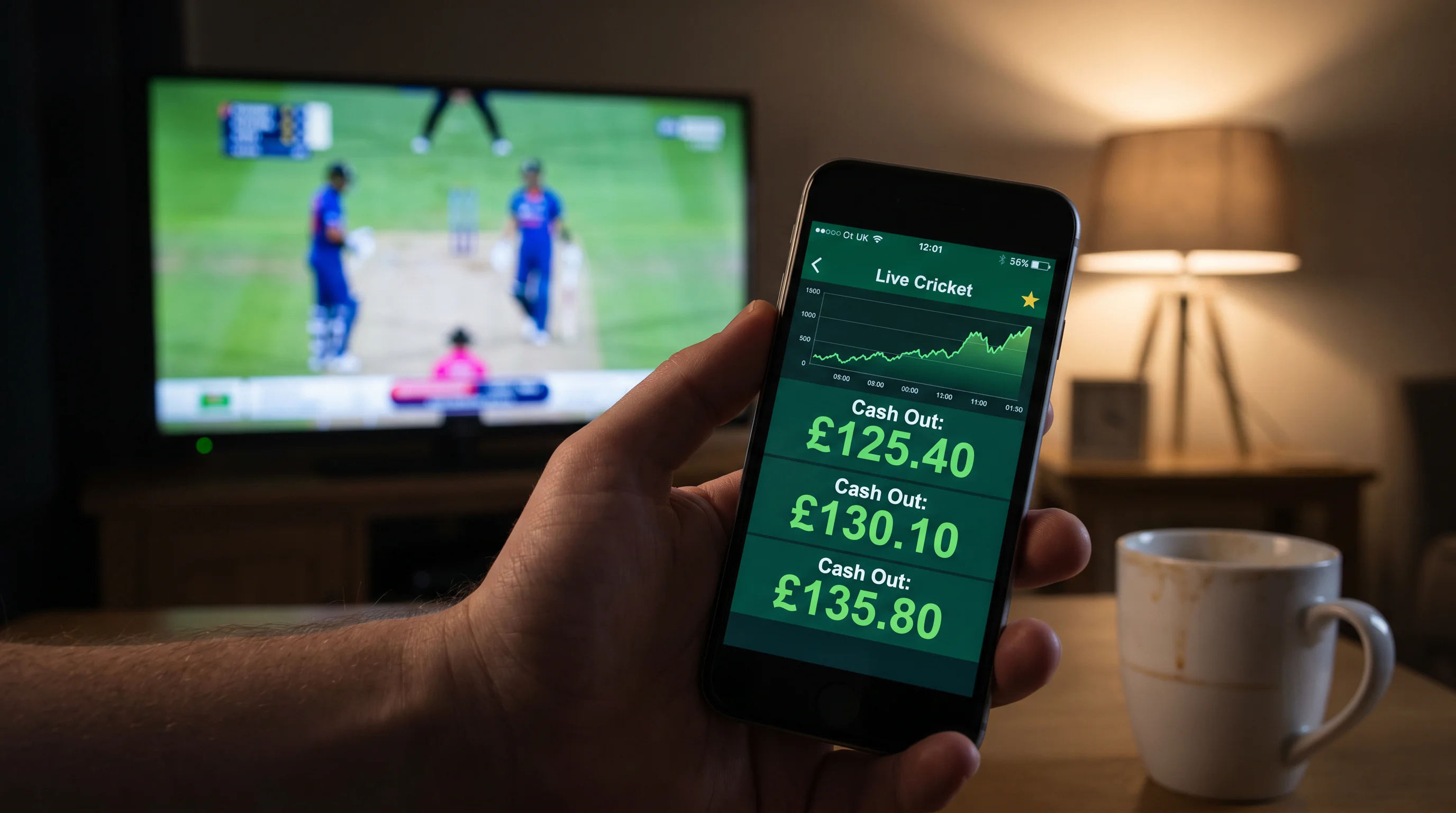
The cash out price is calculated from the live odds. When you placed your original bet, the odds reflected the pre-match probability. As the match unfolds and the probability shifts, the cash out value updates accordingly. If you backed the batting side at 2.50 pre-match and they are now 1.30 to win, your cash out value is high because the probability of your bet landing has increased significantly. If they slump to 4.00, your cash out value drops because the probability has decreased.
The bookmaker builds a margin into the cash out price. The offer you receive is slightly less than the mathematically “fair” value of your position, because the bookmaker needs to profit from the transaction. This margin means that cashing out every bet in profit would yield lower returns than letting winners run and absorbing losses. Cash out is most valuable selectively — in specific situations where securing profit or limiting loss is worth the margin you pay.
Full Cash Out vs Partial Cash Out
Over 70% of UK bets are expected to be placed through mobile devices in 2026, and mobile interfaces have made partial cash out — a feature that was once clunky and unintuitive — smooth enough to use mid-match without fumbling. Full cash out closes your entire position. Partial cash out lets you close a portion of your bet while leaving the rest to run.
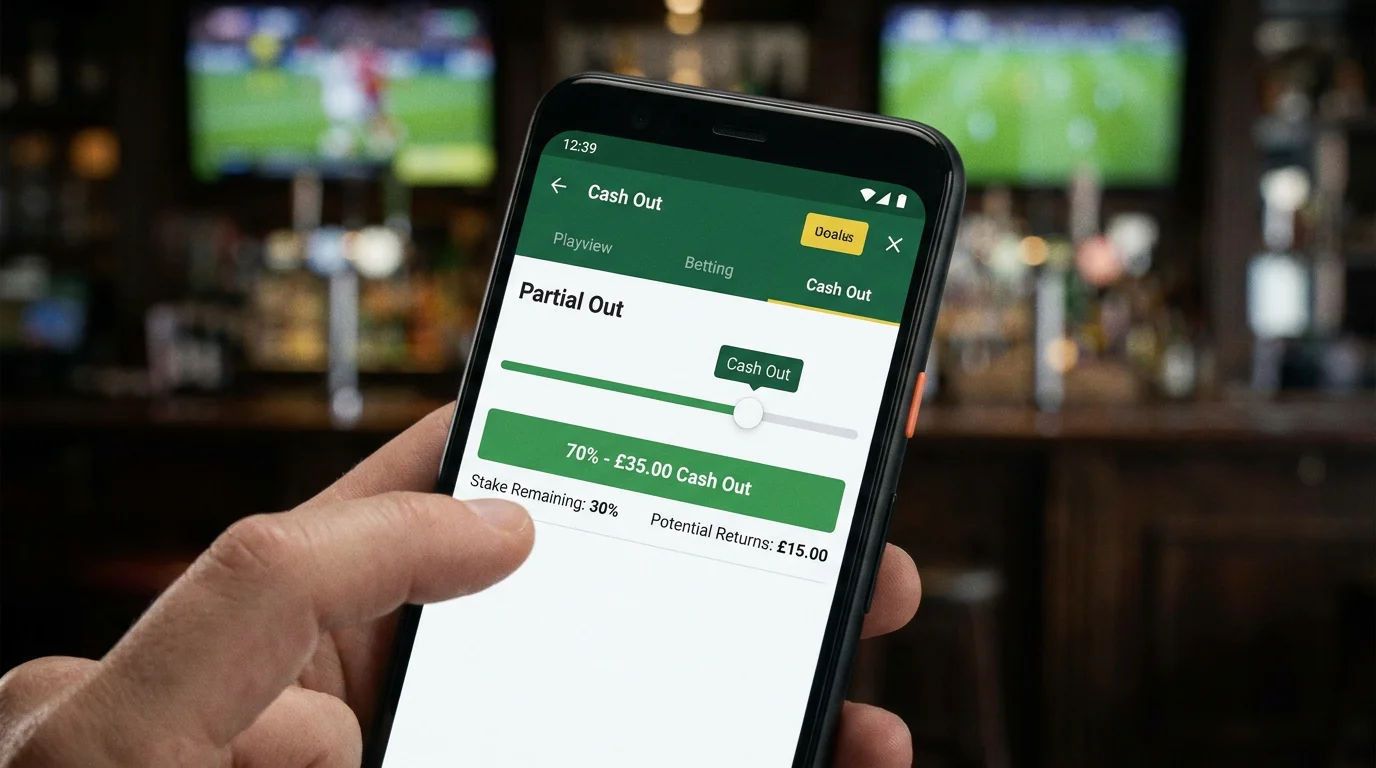
Partial cash out is the more sophisticated tool. If your pre-match bet on a T20 match winner is sitting at a 40-pound profit midway through the second innings, you can cash out half — securing 20 pounds in guaranteed profit — while leaving the other half active. If your selection goes on to win, you collect the remaining profit. If they lose, you still walk away with the 20 pounds you secured.
I use partial cash out more often than full cash out. It satisfies the psychological need to lock in gains without completely abandoning a position that may still hold value. The key is to partial cash out at moments where the match state has shifted enough to justify the decision — a key wicket, a weather delay, a momentum swing — rather than cashing out reflexively because the profit number looks attractive.
One operational detail: not all operators offer partial cash out on all cricket markets. Match winner is almost always eligible for both full and partial cash out. Player markets, totals, and bet builders may only offer full cash out, or may not offer cash out at all. Check before placing the bet if cash out flexibility is part of your strategy.
Cash Out Availability Across UK Cricket Sites
Michael Dugher, the founding CEO of the Betting and Gaming Council, described the betting industry as a significant contributor to the UK economy. Within that industry, cash out has become a competitive differentiator that operators use to attract and retain customers. Most major UKGC-licensed bookmakers offer cash out on cricket, but the depth and reliability vary.
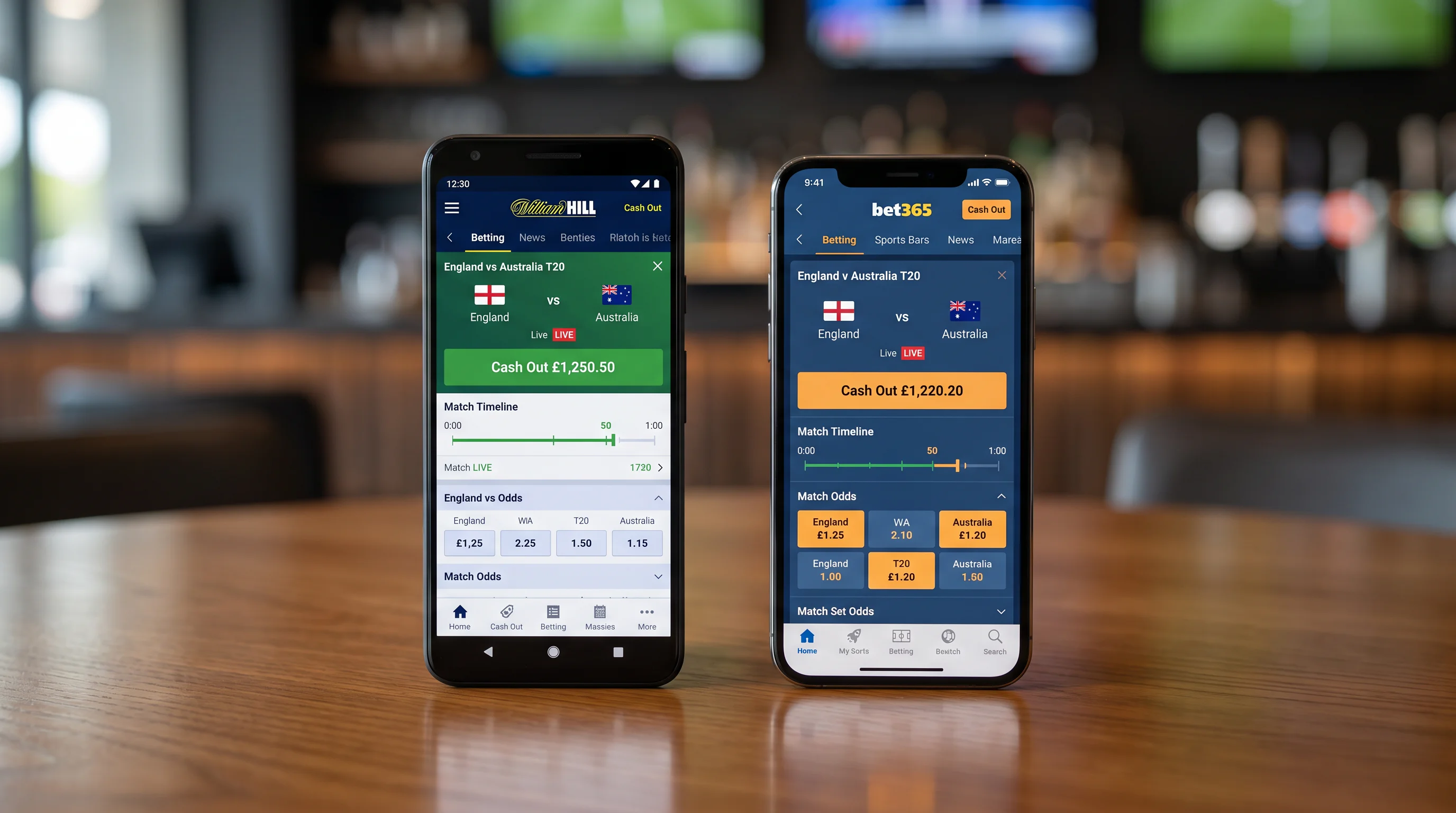
The best platforms offer cash out across match winner, top batsman, top bowler, over/under, and accumulator markets for international cricket, IPL, and The Hundred. Cash out is available both pre-match and in-play, and the offered price updates in near-real-time as the match progresses.

The weaker platforms restrict cash out to match winner only, suspend it frequently during live play (“cash out currently unavailable” is a message every cricket bettor has encountered), and offer it only for a limited set of competitions. Frequent suspension during in-play is the most frustrating limitation because the moments when you most want to cash out — a sudden wicket, a collapse, a weather interruption — are often the moments when the bookmaker suspends the feature to recalculate their risk.
Cash out on accumulators is particularly valuable for cricket. A four-fold acca where three legs have already landed and the fourth is in play is a classic cash out scenario. The guaranteed return from cashing out a three-from-four acca may represent 60-70% of the full potential payout, which is often a rational choice given the risk that the final leg could fail.
When Cash Out Makes Sense in Cricket
Cash out makes sense in three situations. First, when new information changes your assessment of the match. If you backed a side pre-match and their captain is injured during the field, or if a pitch is misbehaving in ways you did not anticipate, cashing out reflects an updated view rather than a panic response.
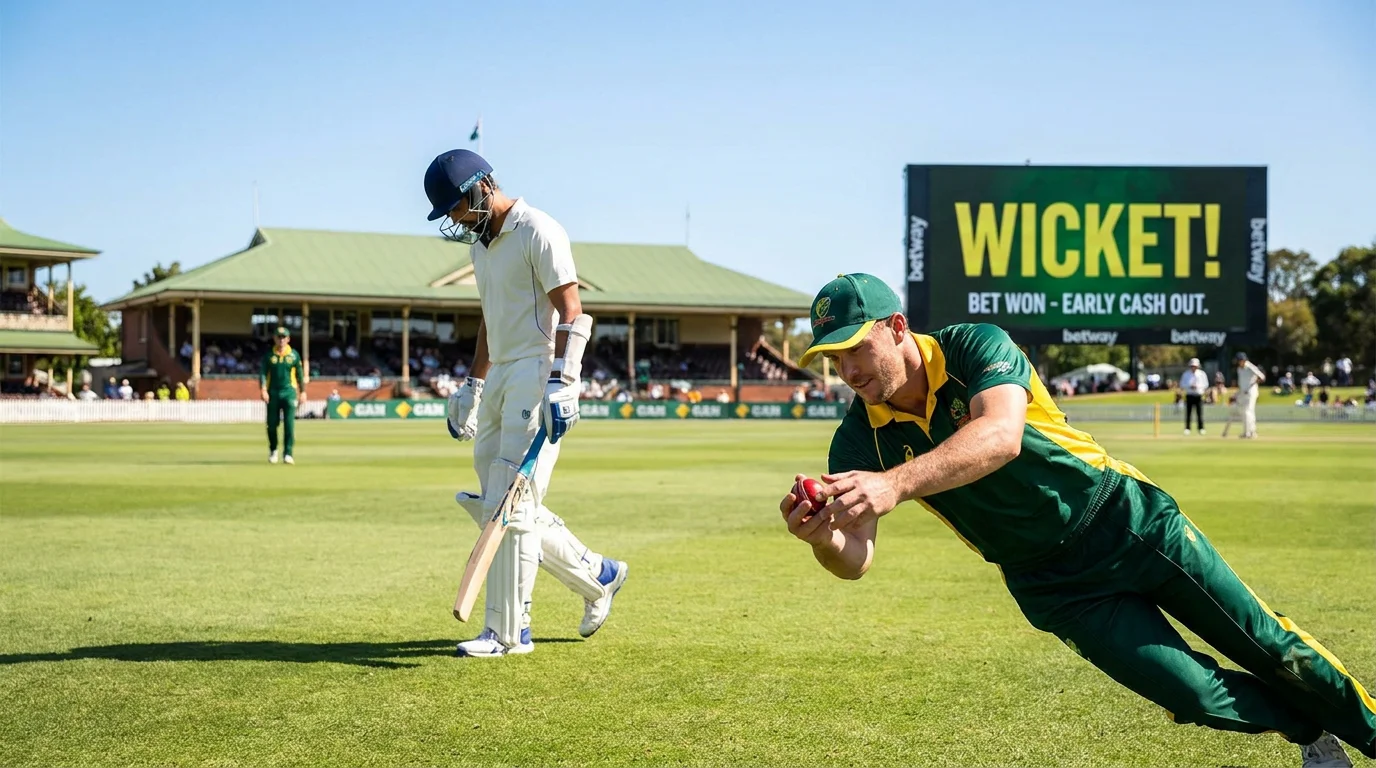
Second, when the profit available exceeds your pre-match expectations for the bet. If you placed a 10-pound bet at 5/1 expecting a 50-pound return, and a rapid early advantage creates a cash out offer of 35 pounds with the match still finely balanced, taking 35 pounds of guaranteed profit is a rational decision — you are securing 3.5 times your stake on a position that is far from resolved.
Third, in multi-day formats where time and weather create uncertainty. Test match bets are uniquely suited to cash out because a well-placed position on day two can be threatened by weather on day four. Securing profit before a rain forecast materialises converts a probabilistic position into a certain outcome. For a deeper look at how live wagering mechanics shape these decisions across formats, live in-play cricket betting covers the real-time dynamics that drive cash out value.
Articles
Prepared by the cricketbettingwebsites.com editorial staff.
