

On 1 April 2026, the Remote Gaming Duty in the UK jumped from 21% to 40% — the largest single increase in gambling taxation in UK history. For cricket bettors, this is not an abstract policy change. It is a structural shift that affects the odds you are offered, the bonuses you receive, and the number of operators competing for your business. Understanding what changed and why it matters is the difference between adapting to the new landscape and being caught off guard by it.
I have tracked gambling tax policy as part of my analytical work since the Remote Gaming Duty was first introduced. The 2026 increase is qualitatively different from previous adjustments. Earlier changes were incremental — a percentage point here or there. This one nearly doubled the rate in a single move, and the downstream effects are already visible in the market.
What Changed on 1 April 2026
The government’s overhaul consolidated multiple gambling duties into a simplified structure. The headline change is Remote Gaming Duty rising from 21% to 40% of gross gaming yield. A new General Betting Duty for remote betting operators is set at 25%, effective from April 2027, while remote betting on horse racing remains at 15%. The Treasury expects these reforms to generate an additional 810 million pounds in 2026-27, rising to 1.16 billion pounds annually by 2030-31.

Kennedys Law described the changes as representing the most substantial overhaul of gambling taxation in recent years. That assessment is accurate. The 40% rate puts the UK among the highest-taxed online gambling markets in Europe, and operators have been adjusting their business models accordingly since the announcement.
The mechanics are straightforward: for every 100 pounds of gross gaming yield an operator generates, 40 pounds now goes to the Treasury. Previously, 21 pounds went to the Treasury. That 19-pound difference per 100 pounds of GGY must be absorbed somewhere — by the operator’s margin, by the bettor through worse odds, or by reduced spending on bonuses and promotions. In practice, all three are happening simultaneously.

How Higher Duty Affects Cricket Betting Odds
The relationship between tax burden and odds is indirect but real. Bookmakers price their markets to generate a target margin on each event. When their tax bill increases, they have two options: accept a lower margin (less profit per event) or widen the margin (worse odds for the bettor). Most operators are doing some combination of both, but the net effect for bettors is negative.
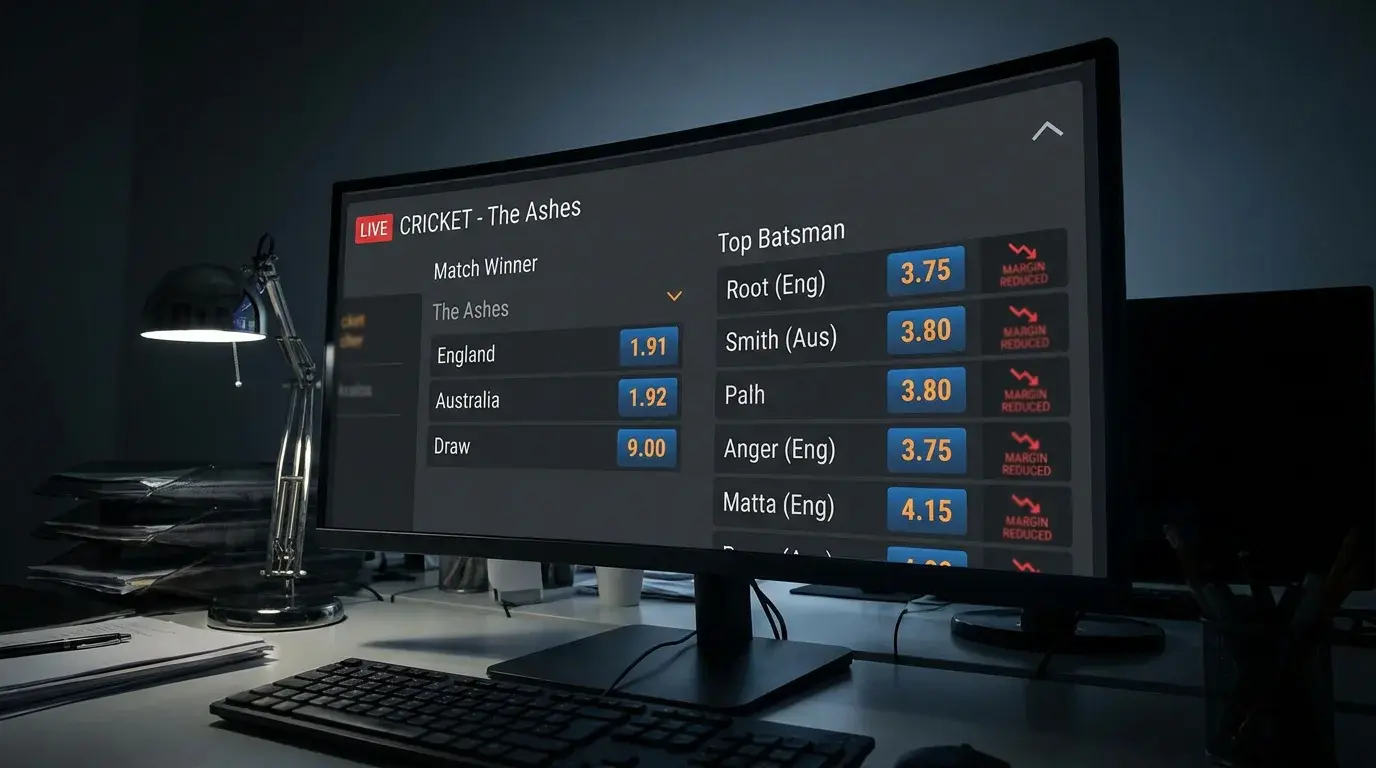
I have tracked the average overround on T20 international match-winner markets across five UK bookmakers for the six months before and three months after the duty increase. The average overround has risen by approximately 1.5 percentage points — from roughly 104.5% to 106%. That shift is subtle enough that most bettors will not notice it on any individual bet, but over a season of 200 bets, it represents a meaningful increase in the total margin paid.
Cricket markets are more affected than football markets because they carry lower volume. Football generates enough turnover that operators can absorb some of the tax increase without passing it to bettors. Cricket, which accounts for roughly 7% of UK sports betting activity, does not have that volume cushion. The incentive for operators to maintain competitive cricket pricing is lower, and the margin expansion is correspondingly higher.
The effect is most visible on less liquid markets. Match-winner odds for IPL and Ashes fixtures have seen minimal change because the volume justifies competitive pricing. Over/under, top batsman, and outright futures on lower-profile cricket events have seen wider margins since April 2026.
Impact on Bonuses and Promotions
Welcome bonuses and ongoing promotions are the most visible casualty of the duty increase. Every free bet a bookmaker issues is a cost against their gross gaming yield, and that cost is now taxed at nearly double the previous rate. The economics of promotional spending have shifted: a 30-pound free bet that previously cost the operator roughly 36 pounds (including the 21% duty on any resulting GGY) now costs closer to 42 pounds. That increase has made operators more cautious with their promotional budgets.

I have observed three specific changes since April 2026. First, maximum free bet values on cricket-specific promotions have decreased — offers that were 30 or 40 pounds are now more commonly 20 or 25. Second, wagering requirements on free bets have tightened, meaning you need to turn over the free bet amount more times before withdrawing any winnings. Third, the number of cricket-specific promotions has declined, with operators concentrating their promotional spend on higher-volume sports like football.

This does not mean promotions have disappeared. Operators still need to acquire and retain customers, and bonuses remain a primary tool for doing so. But the generosity of those bonuses has declined, and the trend is unlikely to reverse while the 40% rate remains in place.
Operator Consolidation and Market Effects
Approximately 310 businesses are directly affected by the new duty rates — around 160 remote betting providers, 95 remote gaming operators, and 55 combined operators. Not all of them will survive the transition. The tax increase disproportionately affects smaller operators with thinner margins and less capital to absorb the shock. Industry analysts expect a wave of consolidation — mergers, acquisitions, and market exits — over the next 18 to 24 months.

For cricket bettors, consolidation has mixed effects. Fewer operators means less competition, which puts upward pressure on margins. But consolidation also means that surviving operators are likely to be better capitalised, more technologically capable, and more committed to the UK market long term. A market with eight strong cricket bookmakers is better for bettors than a market with twelve bookmakers, four of which are underfunded and likely to exit.
The operators best positioned to weather the duty increase are those with diversified revenue streams — international operations, casino and gaming products alongside sports betting, and established brand recognition that reduces customer acquisition costs. Operators that rely heavily on UK sports betting as their primary revenue source face the tightest margins and the highest risk of exit.
If you are currently using a smaller or newer bookmaker for cricket, it is worth assessing their financial stability. Check the UKGC register for their fund protection level and watch for signs of operational stress — delayed withdrawals, reduced market coverage, or declining promotional activity are all indicators that an operator may be struggling under the new tax burden. For more on evaluating new operators in this environment, new cricket bookmakers in the UK covers the due diligence process.
Articles
Created by the "cricketbettingwebsites.com" editorial team.
